Friday, October 25, 2013

New Afrika's (Jackson, Mississippi) Latest Victim: 87-Year-Old Lawrence ‘Shine’ Thornton


Who’s that, you ask?
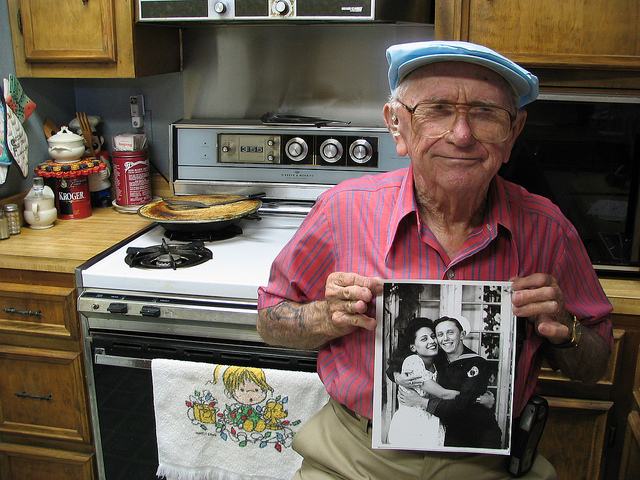
Lawrence 'Shine' Thornton: WWII vet. Died in New Afrika (Jackson, Miss.)

When the name of some black person murdered years ago is so much more worthy to bring when discussing inter-racial crime, why mention a white, World War II veteran murdered in by two black males?

Just another octogenarian who has outlived his usefulness.

Right?

Just like Lawrence ‘Shine’ Thornton, an 87-year-old white man living in Mississippi; just another octogenarian, who served in World War II, murdered by a quartet of ‘Obama’s Sons’ (to be fair, one is a black female).

Oddly, CNSnews.com doesn’t mention the race of either Mr. Thornton or the four black individuals charged with his murder. Apparently even this offshoot of Conservatism Inc. can only go so far when they dog whistle.

Thornton would die at the University of Mississippi Medical Center in Jackson, that 86 percent black capital city of the state, whose mayor – Chowke Lumumba - has advocated black racial separatism under the banner of ‘New Afrika’.  [4 Teens Charged in Death of WWII Veteran, Hot Tamale King, CNSnews.com, 10-25-13]:
The king is dead. 
Four teenagers are being charged with capital murder in the fatal mugging of 87-year-old Lawrence E. 'Shine' Thornton of Greenville, Mississippi. 
‘Shine’ was a World War II veteran and a famous personality in the Delta region for his hot tamales. They were known as ‘Maria’s Famous Hot Tamales’, named after his wife Mary. He was crowned king of the 2012 Delta Hot Tamale Festival. 
According to Greenville police, Thornton was killed after being accosted in his own driveway on Oct. 18. He was pushed down and his wallet stolen. 
He passed away from his injuries two days later at the University Of Mississippi Medical Center in Jackson. 
Assistant police chief Andrew Kaho tells the Delta Democrat Times Terrance Morgan and Edward Johnson, both 19; and Leslie Litt and Geblonski Murray, both 18, were arrested in connection with the incident. Each of the four is charged with robbery and conspiracy to commit robbery. 
I didn’t know ‘Shine’ Thornton, but his story was well known and documented in the Delta region. 
It’s a story of hard work, overcoming adversity, belief in God and finding some success in doing something you love. 
A veteran who served on a minesweeper in the Pacific theater during World War II, he returned home to work for a local electric company and eventually opened a liquor store. 
According to a Southern Foodways documentary, a 59-year-old Thornton was worried about making ends meet at the liquor store and was considering getting into the hot tamale business. 
A serious head injury helped to finalize any plans of going from the liquor store to the kitchen. 
“I got hit in the head, I had to go out of the whiskey business. It was about six months before I could do anything,” Thornton said. 
“Doctor Farmingham operated on my head for me and he told me, 'I’m going to have to operate on your head and I don’t know whether you can come out of this alive or not'.” 
“But if you do come out of this alive it’ll be through God’s help that you live through it,” Thornton continued, “But I can’t guarantee you nothing. But I did, I come out of it alive and I got to where I could go back to making hot tamales.” 
Thornton made the hot tamales that made him a local legend for 20 years. 
In 2012, he was crowned king of the inaugural Delta Hot Tamale Festival. 
In 2013, Thornton was accosted and killed for his wallet, allegedly by four teens wanting the money his passion and labor had put in its folds. 
The king is dead.
Why CNSnews.com couldn’t point out the racial dynamics of this attack – strangely similar to the black-on-white murder that just occurred in Jackson when BASS Pro Jimmy Johnson was killed.

Perhaps the venerable Thomas Sowell is on to something…[Early Skirmishes in a Race War: Officials and media aren’t being honest about the violence, National Review, 10-24-13]:

 One of the reasons for being glad to be as old as I am is that I may be spared living to see a race war in America. Race wars are often wars in which nobody wins and everybody ends up much worse off than they were before. 
Initial skirmishes in that race war have already begun, and have in fact been going on for some years. But public officials pretend that it is not happening, and the mainstream media seldom publish it at all, except in ways that conceal what is really taking place. 
More dangerous than these highly publicized episodes over the years are innumerable organized and unprovoked physical attacks on whites by young black gangs in shopping malls, on beaches, and in other public places all across the country today. 
While some of these attacks make it into the media as isolated incidents, the nationwide pattern of organized black-on-white attacks by thugs remains invisible in the mainstream media, with the notable exception of Bill O’Reilly on the Fox News Channel. 
Even when these attacks are accompanied by shouts of anti-white rhetoric and exultant laughter at the carnage, the racial makeup of the attackers and their victims is usually ignored by the media, and public officials often deny that race has anything to do with what happened. 
These attacks have sent many people to the hospital, and some victims have died, but the attacks are often carried out in a festive atmosphere. What are called “troubled youths,” in this and other contexts, are often in fact young people enjoying themselves greatly by creating big trouble for others. 
Sadly, what happened in Milwaukee and Chicago were not isolated incidents. They were part of a pattern repeated in dozens of cities, in every region of the country. Colin Flaherty’s book, which is subtitled “The Return of Racial Violence to America and How the Media Ignore It,” reveals this pattern in painful detail. 
Other books are emerging that are more clearly a white backlash, in the sense that they attack behavior patterns among contemporary blacks in general. 
Perhaps the most clearly “backlash” books are those written by Paul Kersey, whose central theme is that whites have created thriving cities, which blacks subsequently took over and ruined. Examples include his books about Birmingham (The Tragic City) and Detroit (Escape from Detroit). 
Kersey even takes a swing at Rush Limbaugh (and at yours truly) for saying that liberal policies destroyed these cities. He says that San Francisco and other cities with liberal policies, but without black demographic and political takeovers, have not been ruined. His books are poorly written, but they raise tough questions. 
It would be easy to simply dismiss Kersey as a racist. But denouncing him or ignoring him is not refuting him. Refuting requires thought, which has largely been replaced by fashionable buzzwords and catchphrases when it comes to discussions of race. 
Thought is long overdue. So is honesty.

Honesty.

Overdue.

Funny – the people at CNSnews.com couldn’t bring themselves to be honest in the reporting of Lawrence ‘Shine’ Thornton murder, leaving out the crucial element of the black-on-white nature of the attack.

Well, three black males and a black female on one octogenarian white man.

The system is collapsing.

Before our eyes, it is collapsing.

There is no need to do anything that would impede the systems collapse; there is no need to do anything that would buttress this system and give it any fuel to sputter along.

Our job, throughout this entire struggle, has been merely to survive.

One of the most vicious, tyrannical systems ever devised by men is failing, and as it continues to become increasing unstable, the system will lash out in unpredictable manners/ways as a form of self-perseveration.

That’s fine, and only natural

Your job, even if you are uncertain about the end-game of this system and still cling to some fictional notion of a ‘color-blind’ society, is to survive.

Sowell calls the works of ‘Paul Kersey’ a “white backlash” against black dysfunction, and he would be correct. But they are more than that.

SBPDL was started as a joke, but overtime it became something more.

Something elemental.

To paraphrase Jed Eckhart from 1984’s Red Dawn: "Don’t cry. Let it turn into something else.”

Thursday, October 24, 2013

58 Percent Black Wilmington, Delaware: Death By ‘Thugicide’


With just over 71,000 people, the largest city in Delaware is Wilmington. Named for the Prime Minister during the reign of King George II, the city today hardly resembles that of its colonial forbearers’.

Only 27.9 percent of the city’s population is white, compared to 58.0 percent of the population being descended from the black slave population that once called the state of Delaware a ‘home away from home.’

Yes, the largest city in Delaware is 58 percent black.

And the largest city in Delaware, which is currently 58 percent black, was long ago abandoned by the white middle class (that helped build and sustain the city) during the age of school integration.

Now, Wilmington is a city resembling Port-au-Prince, Haiti (that joyous former colony of France, now a shining beacon of hope, boasting the world’s oldest black republic!), where children dodge bullets on a daily basis. [No Child Allowed Outside: Urban violence surrounds children in Wilmington, WDDE.org, 1-16-2012] -

When Courtney White goes on sleepovers, she totes the blanket that a funeral home gave her to commemorate her big brother, who was shot to death. 
The eighth-grader says she didn’t feel out of place when 25-year-old Brandon Brinkley became Wilmington’s 24th homicide of 2008. After all, at least 20 of her friends have lost a family member to violence. 
Courtney, a peer leader and middle-school band member, is just one of countless children touched by gun violence in Delaware’s largest city—violence that will affect those children for years, if not the rest of their lives. For example: 
  • Six of the children who run track for West End Neighborhood House have a parent who was murdered.
  • Four young children had to get over their father’s body to exit their Northside apartment after a gunman shot him in the face as he opened the front door on a sunny morning last June.
  • At dinnertime one night last April, gunmen fired six shots into Jamar Brown as he shot hoops on crowded basketball court frequented by children.
  • Dominique Helm stood laughing on the flagstone steps leading to his Brandywine Village row house when a gunman opened fire on him in September. As his teen cousins stood nearby, Helm’s blood sprayed the white trim on the front door. The 19-year-old stumbled inside and died on the living room stairs as his mother, Nicole Helm, ran to him.
·       “If a kid lives in the City of Wilmington, they almost always either have been a witness to or in some way experienced violence,” said Phil Arendall, executive director of Clarence Fraim Boys and Girls Club.
Slide from a powerpoint presentation made by the City of Wilmington on gun-crime in 2003

Dear Mr. Arendall, perhaps you mean if a non-white kid lives in the City of Wilmington, for the gun violence/non-fatal shootings/gun homicides are almost axiomatically the byproduct of an individual black person (almost always a male) aiming to maim another black individual. Collectively, you get a city where black gun violence is the only game in town (knowing that ‘no snitching’ is a concept pervasive in the black community of Wilmington, the average unknown suspect of 15 percent can easily be slipped into the African American category). The Center for Community Research & Service and The Graduate School of Urban Affairs & Public Policy at the University of Delaware produced a study called Handgun Violence in Delaware: A Picture of the State. Released in 2002, the picture of gun violence in Wilmington is almost entirely black:
From 1999, through the first quarter of 2002, the vast majority (80%) of the suspects in the Wilmington shootings were African American. That was fairly consistent through the years we studied with a high of 84 percent in 2001 and a low of 77 percent in 1999 and 2002, thus far. The race/ethnicity of 15 percent of the suspects was unknown.  (p. 21) 
Overwhelmingly in the Wilmington shootings, African Americans victimized other African Americans. In 140 of the 170 cases in which we know the suspect’s race, both the victim and suspect were African American. (p. 24)

Funny, in Table 17 of the study, we learn that white males who were victimized by shootings in Wilmington all had a black suspect; same with white females. In 10 of the 14 shootings of Hispanic males, a black suspect was involved; in two shootings of Asians, a black suspect was involved.

Not much has changed since the late 90s/early 2000s. [Growing audacity among city gunmen: Residents fear they'll be innocent victims, Delaware Online, 9-20-2009]: 
 Despite that, city police say this year is no different than any other and attribute most of the shootings to disputes between rival drug dealers.  
Residents as well as state and national experts say a large percentage of them also are triggered by petty spats -- a dirty look, an elbow thrown during a pickup basketball game, an insult about clothing.  
The council also said that what's happening in Wilmington this year is similar to what was documented in the 2008 report.  
In both years, it said black males are by far the most likely people in Wilmington to be triggermen or victims. In 2008, 81 percent of the victims were black males, as were 91 percent of the suspects.  
Young men 18 to 21 years old also are more likely to be involved in crime, it said. About 23.5 percent of the shooting victims fell within this range, as did 48 percent of the suspects.  
Ninety-two percent of the cases involved a black victim and suspect. This is similar to an FBI report released last week that said the most typical homicide in America involves a young black man who is shot by another black man who knew him.
IN the absence of whiteness, the civilization they birthed is aborted by the new demographic in charge of maintaining Wilmington. Under black political rule, the inhabitants of the city are in danger of a ‘state of emergency’ being declared to off-set the majority populations lack of civility and ability to abide by the draconian white man’s rules. [Delaware Black Caucus Responds to Record Violence, Politics365, 2-10-2011]:

Political tensions in Delaware are flaring, as members of the state’s 19-member Black Caucus clash with officials from across the state over how to respond to the record violence taking place in the state’s largest municipality, Wilmington. 
The Black Caucus, a collective of African American state and local elected officials, are urging Wilmington and the state of Delaware to take drastic measures to reverse the tide of violence.  They are even recommending a comprehensive “state of emergency” in which state and local police task forces would concentrate responses to neighborhoods with high rates of gun violence. 
The areas include the Hilltop, Northeast and West Center City sections of Wilmington.  The end of 2010, which witnessed a fatal home invasion in the Northeast section, marked the city’s 27th killing that year and a new homicide rate continuing the city’s record-breaking trends since 2006.  But, already at the start of 2011, there have been 13 homicides in Wilmington.And while Black Caucus members feel it’s high time for the state to accept the brutal realities of Wilmington life, Wilmington Mayor James W. Baker initially pleaded for caution and a holistic assessment of the root causes at play. 
“Throwing police at the problem is not just where it should be,” Baker said in an earlier interview with Delaware Online. “Police are part of the issue, but we have to address the whole issue of mental and physical health, education issues, broken family issues, the broken community issues. All these things contribute to crime and we have to get people to understand that it is people that make the difference in a community where crime exists or doesn’t exist.” 
However, Baker still agreed to the Caucus proposal, joining the group in renewed pressure on Delaware Governor Jack Murkell to form three multi-agency task forces responding to crime in the city.  As part of a compromise, Caucus Members dispatched Baker to submit a list of combined proposals to the Governor, from the deployment of New Castle County and state police to possibly calling a “state of emergency” to bringing in the National Guard and imposing curfews.

Imposing curfews and bringing in the National Guard would be smart, considering this population group wasn’t the byproduct of the ‘Great Migration’ of blacks from the South; it’s homegrown terrorism [Wilmington's violent crime pushes Delaware to sixth highest in US, Delaware Online, 2-17-2013]
City violence 
Violence by chronic criminals pushed Wilmington’s homicide number last year to a record 25 people killed in street shootings. Another 94 were wounded. 
That steady barrage of shootings in the city of 71,000 residents included several spectacular incidents, including a deadly shootout at an Eden Park soccer tournament where spectators returned fire. Three people died, including a 16-year-old boy waiting to play. Two others were wounded. 
So far this year, 20 people have been shot, a pace ahead of 2012. Five have died, including two women gunned down at the city courthouse last week by one’s former father-in-law, who killed himself with his handgun. 

Among this year’s injured by gunfire was a city cop who took a bullet to the jaw after a traffic stop. Police arrested the suspected gunman , but no one else has been charged in the other shootings. 
Last year’s murders represented a sharp escalation of rampant violence in a city that ranked third in America among 450 similar-sized cities for violent crime, according to the most recent FBI data available. 
The city’s violence played a major role in Delaware ranking sixth nationally in violent crime in 2011, with more than 5,000 such acts reported, FBI records show. In 2010, Delaware ranked fourth. 
Wilmington Police make arrests in only about one-third of the shootings, a News Journal examination last year showed. 
That investigation also revealed that cases are difficult to solve, in large part, because victims refuse to cooperate and witnesses are intimidated or follow the “don’t-snitch” code. 
Since January 2011, shooting suspects and victims each have been arrested on average about two dozen times and racked up an average of 50 charges, the newspaper found. Some in law enforcement circles call such shootings “thugicide.” 
“We need to focus on the problem and Wilmington is the problem, if we are candid about it,” Attorney General Beau Biden said. He noted that violent crime in Delaware – while higher than most other states – has fallen since 2007, except in Wilmington and a few other areas. 
Former city police chief Michael J. Szczerba, who retired in January after 12 years, complained that the same men keep getting arrested but streets are no safer. 
Tougher sentences and higher bail would “stop the speed of that door spinning,” he said. 
‘Thugicide’.
When the epitaph is written for Wilmington, it will simply read ‘Death by Thugicide.’ 

Wednesday, October 23, 2013

The Meek Shall Inherit the Earth (Courtesy of your Tax Dollars)

Check-mate, white America. 

Right? 


You are now dethroned from power, scurrying like rats for the few morsels of hope tossed down by the Managerial-Elite of Black-Run America (BRA), all the while paying for your own dispossession via a transfer of wealth through taxation. 


We could have been on Mars, but instead we paid for Ralph Abernathy's dream of ending poverty, racism, and hunger. 

Alleviating hunger via SNAP/EBT cards. When they stop working, we already know what happens...


To pay for this dispossession, NASA and improvements in the transportation infrastructure were abandoned; the goal was to turn all of America into nothing more than Newark and Detroit. [Report: U.S. Spent $3.7 Trillion on Welfare Over Last 5 Years, Weekly Standard, 10-23-13]:
New research from the Republicans on the Senate Budget Committee shows that over the last 5 years, the U.S. has spent about $3.7 trillion on welfare. Here's a chart, showing that spending versus transportation, education, and NASA spending: 
"We have just concluded the 5th fiscal year since President Obama took office. During those five years, the federal government has spent a total $3.7 trillion on approximately 80 different means-tested poverty and welfare programs. The common feature of means-tested assistance programs is that they are graduated based on a person’s income and, in contrast to programs like Social Security or Medicare, they are a free benefit and not paid into by the recipient," says the minority side of the Senate Budget Committee. 
"The enormous sum spent on means-tested assistance is nearly five times greater than the combined amount spent on NASA, education, and all federal transportation projects over that time. ($3.7 trillion is not even the entire amount spent on federal poverty support, as states contribute more than $200 billion each year to this federal nexus—primarily in the form of free low-income health care.)
What type of world is that $3.7 trillion help fund? How about one where two children left home alone when a house fire broke about being the least of the worries for the aunt involved (who left them home alone), compared to the status of her EBT/SNAP food stamp card: 
House Fire Leaves 1 Dead, 1 in Hospital2 Year Old Still in Critical ConditionUpdated: Tuesday, 20 Oct 2009, 5:24 PM EDTPublished : Monday, 19 Oct 2009, 5:18 PM EDT 
MEMPHIS, Tenn. - Screams filled the evening sky as family members try to cope with what happened Monday in a South Memphis community. Two children, 2-year old Catareon Dunn and 3-year old Ladareon Dunn, were left home alone shortly before a fire broke out.  
Officials responded to a house fire call at 1236 Effie Road off Mt. Moriah.
The two boys were left unattended while their mother and aunt left the house to go drop off a friend. Sometime after that, 911 received a call from neighbors saying the house was on fire. 
Neighbors say they heard screams coming from the house and rushed to the back door to try and rescue the children. However, when they got there, the flames and smoke were too powerful for them to enter. 
When the children were finally pulled from the house, onlookers described them as looking like "rag dolls." Both were rushed to the Le Bonheur Children's Hospital in critical condition. Ladareon died shortly thereafter. Catareon remains in critical condition.  
The children’s aunt, Marilyn Wilson, who left the house with the mother, said she had no regrets about leaving the children home alone, “No, I really don’t because if they had been there by themselves, I don’t know if the boys set the house on fire or somebody threw something in there to set it on fire. I really need to get in there to see if my purse burned up. I had my Food Stamp Card and everything in there.” 
The cause of the fire is under investigation by the Memphis Fire Department. 
 A food stamp card can be replaced. Children cannot. 

Worse, once a city loses its founding population, expecting to maintain the same standard-of-living with a new demographic in political power means you get Memphis 2013. 

But happens when a city is overwhelmed by those seeking handouts? What happens when a city no longer has enough white producers to fleece, to help pay for the cradle-to-grave lifestyle of those dispossessing them? 

The welfare office tells them to go elsewhere, seeking new white towns to conquer. 
[Pa. officials concerned about migration from N.J., USA Today, 7-15-2007]:
Robin Moore had never heard of this city in the mountains of central Pennsylvania, so far in distance and feeling from her home in Newark.
Compelled by a desire to stretch her dollars and find space and safety, Moore dialed a phone number she spotted on a flier in a Newark welfare office. "I always liked Pennsylvania, so I kind of took a chance with Altoona," says Moore, 37.
In March, she moved with her husband, three daughters and grandson to a public housing development here.
"I wanted to protect my children," she says. "I wanted to protect my husband because in New Jersey, there's a lot going on. This town had more of what I wanted, a little more peace."
Moore's is one of at least 16 lower-income families who in recent months moved more than 200 miles across state lines from Newark and nearby urban enclaves to Altoona, population 47,000.
Home for Moore is a four-bedroom, two-story unit that has a back deck and mountain view, a marked change from the Newark public housing project, rife with drug dealing, where she once lived.
The arrival of Moore and others, along with inquiries by dozens of other New Jersey residents seeking subsidized housing here, has triggered concerns by Altoona housing officials that New Jersey is steering its poor to Pennsylvania, kindling tensions between longtime residents and the newcomers.
The migration is one reflection of the shortage of affordable housing in many metropolitan areas. Teachers, police officials and other middle-class workers often live far from where they work because they can't afford adequate housing in those communities.
The poor aren't much different, says Danilo Pelletiere, research director for the National Low Income Housing Coalition.
A curious trend
It was about a year ago that the Altoona Housing Authority began getting six to eight calls a day from New Jersey residents seeking applications for subsidized housing, Executive Director Cheryl Johns says.
She found it curious that those seeking to move here had no idea where the city was.
When she finally asked an applicant why she was interested in Altoona, the caller said her welfare case worker had referred her. Johns decided to take action. "When I have almost half of the people on my waiting list from the New Jersey area, it's an issue," Johns says.
She contacted a state senator whose office tracked down two fliers, posted in a Newark welfare office, that gave the phone numbers of the Altoona Housing Authority and an apartment development in Williamsport, Pa., that accepted government rental vouchers.
Bruce Nigro, welfare director for Essex County, N.J., says that once he learned of the fliers, he banned them.
A person who qualifies by income for subsidized housing can apply for a unit anywhere, says Donna White, a spokeswoman for the Department of Housing and Urban Development, but most people stay in their local communities. Of the 1.8 million families in the rental subsidy program, 7%-10% get a voucher in one area, then use it in another, she says.
Like locust, bred in one location and bleeding all natural resources there dry, they spread in search of a new land to overwhelm:
Watching Apollo 11 lift-off... the antithesis of MLK's dream
Newarkers take Altoona expressPa. city is none too pleasedFriday, June 01, 2007BY JONATHAN SCHUPPEStar-Ledger Staff 
Cheryl Johns found it curious that poor people from Newark were calling Altoona, a small rural town 260 miles away in the hills of Central Pennsylvania, looking for places to live. 
Johns, who runs the Altoona Housing Authority, first noticed the trend a few years ago, when her office started getting requests from Newarkers to fill out applications for government-subsidized apartments. 
Then the odd trickle became a deluge. 
Now Altoona is accusing Newark of referring clients to them, and a Pennsylvania congressman has asked New Jersey Gov. Jon Corzine to intervene. 
"What I'd like to see stopped is this flood of people coming from New Jersey on a daily basis," Johns said yesterday. "I'm not denying a housing application to anyone. But the housing problem in Newark needs to be fixed. Don't push your problem to Altoona." 
The spat apparently stems from the severe shortage of affordable housing in Newark and other parts of New Jersey, where home costs are among the top in the nation and federal subsidies are shrinking. That, New Jersey officials say, has made people desperate. 
The problem is particularly acute in Newark, where 28 percent of the 273,546 residents live in poverty. The city housing authority, wracked by layoffs and fiscal mismanagement, is now bracing for massive funding cuts and has closed a waiting list for subsidized apartments. 
Demand for affordable housing also outstrips supply in Altoona, a city of 49,523 people, 18 percent of whom live in poverty. Johns said many applicants have to wait a couple years for public housing units and so-called Section 8 rental vouchers. 
Since the calls started, the Al toona Housing Authority has placed about eight families from Newark in its apartments, and given Section 8 vouchers to another six, Johns said. Other Newarkers have found cheap apart ments from private landlords in Al toona, she said. 
Those numbers aren't a problem, she said. But she started get ting upset a few months ago, when requests for applications from Newarkers began pouring into her office. Anywhere from three to five calls were coming in every day -- twice the previous rate. When her employees asked why Altoona, the callers gave one of two answers: a friend told them about Altoona, or they got the number off a flier in Newark. Many of them cited crime and poor conditions in Newark's public housing complexes. 
That set Johns off. With help from a local state senator, she got a hold of the offending flier, purportedly taken from a Newark welfare office, which listed the numbers of the Altoona Housing Authority and a private complex in Williamsport, Pa. (where officials say there haven't been any complaints). 
Robin Moore, 37, saw the flier during a January 2006 visit to her caseworker in the Essex County welfare offices on Rector Street in Newark. She loved her hometown, and she'd never even heard of Al toona. But she was tired of working 50-hour weeks as a customer service representative just to pay the bills on the two-bedroom apart ment on Osborne Terrace she shared with her husband, three children and grandson. And she worried about the drugs and crime. 
So she called the number and got an application for an Altoona Housing Authority apartment. Her first trip to Altoona, to fill out more paperwork, was a 15-hour Greyhound bus ride. In March, she got approved to move her family into a tidy four-bedroom apartment in Fairview Hills for less rent than she paid for the smaller place in Newark. She's collecting unemployment insurance and her husband works as a housing authority groundskeeper.
But Pennsylvania officials weren't satisfied. 
In a May 21 column in the Al toona Mirror newspaper, Mayor Wayne Hippo alleged that "more than a few" of the New Jersey mi grants "have been involved in the drug and crime trade." He didn't mention Newark by name. 
"Personally, I'm sickened that somebody in a New Jersey welfare office decided to 'solve' some of New Jersey's problems by creating a list of Pennsylvania cities to send their troubled cases to," Hippo wrote. 
On Wednesday, Johns fired an angry letter off to Keith Kinard, di rector of the Newark Housing Authority, accusing his staff of referring their clients to Altoona. 
In some alternate America, the riots in Detroit and Newark of the late 1960s were greeted with volley after volley of bullets, fired by members of the National Guard. The Kerner Commission was never assembled, for the blame on the disturbances/insurrection/rebellion was placed squarely in the direction of the black community.

Those cities didn't become incubators for every negative social characteristic associated with the black underclass, the type of pathologies breeding dysfunction never before seen on earth.

Ralph Abernathy wasn't allowed to protest the Apollo launch in Florida, for he and his ilk never came close to Cape Canaveral on their horse and buggy.

In that alternate America, the money spent over the past 40 years on welfare, social engineering (Head Start, HUD programs, diversity initiatives, etc.), etc., went to the building of a permanent base on the moon, from which a space port was constructed that served as the launching pad for colonizing the stars.

And for the launch of the ship that would put man on Mars.

Instead, a city like Wilkes-Barre, Pennsylvania gets to taste the type of community blacks have created in the shadows of skyscrapers found in cities long ago abandoned by white people.

We could have been on Mars, but you had to fund Black-Run America (BRA) instead.

Tuesday, October 22, 2013

Wilkes-Barre, Pennsylvania: The Black Undertow Cometh

A town of 41,000.

Only seven square miles.

In 2000, it was 92 percent white.
92 percent white in 2000; 79.2 percent white today

Today, it's 79.2 percent white.

It's black population has doubled, from five percent to 10 percent.

And with this population, so comes the undertow. The Black Undertow [A DEADLY CITY:
As W-B's homicide rate spirals, city struggles to find solutions, Times-Leader, 10-19-13]:
WILKES-BARRE — You are more likely to die by homicide in Wilkes-Barre than in major cities like New York, Philadelphia, Pittsburgh or Chicago.
There were 11 slayings in this city of 41,000 people this year through Friday, ranging from a bruised and battered 2-month-old boy to a 46-year-old woman allegedly shot to death by her estranged husband.
That makes the city's homicide rate so far this year eight times larger than New York's — even though the nation's largest city has 200 times more people than Wilkes-Barre — and double that of Philadelphia, which has a population 37 times larger. Young adults of color are most likely to be slain.
Nine out of the 11 victims were black males, the average age of all victims is 27, and all but one died of gunshot wounds. What's driving this rash of homicides and when will it end?
There don't seem to be any simple answers. Crime experts interviewed for this story said:
• Drugs are involved in a majority of the killings.
A criminal element in Wilkes-Barre is a black element
• Victims often know their assailants.
• The city has bolstered its anti-crime unit to focus on vice and narcotics offenses.
• Analysis of crime patterns can be a valuable tool for understanding and preventing violence. “Somehow, we need to break this cycle of violence in our community,” said Ron Felton, leader of the Wilkes-Barre branch of the NAACP, adding that the city's black residents have a role to play in reporting crimes that are decimating husbands, sons and brothers. “We need to work with law enforcement where we can. We need to not be silent,” Felton said.

With 210,000 people, Rochester, N.Y., is about five times larger than Wilkes-Barre, but both are aging industrial cities with homicide rates well into the double digits: Rochester's 31 killings this year translate into a rate of 14.7 per 100,000 people, while Wilkes-Barre's rate is nearly twice that at 26.7 per 100,000 people.

Charlotte Raup, coordinator of Wilkes-Barre's Crime Watch organization, wasn't surprised to learn the local homicide rate is outpacing larger cities, only dismayed.
“Oh my God, we're only seven square miles,” Raup said of the statistic during a Thursday evening interview, squeezed in between her fifth community meeting of the week and going out on patrol for the night. Among the problems Raup sees is a fall in the number of city police officers.
In an Oct. 8 ceremony at which six officers were promoted, the mayor, with Dessoye at his side, said the department now is at 75 officers, down from a one-time high of 91. The mayor's $42.7 million 2014 budget, unveiled three days later, calls for hiring at least 10 police officers, at a cost of $1 million.

'Subculture of violence' Dessoye himself cautions that more feet on the beat won't necessarily change what he sees as larger societal issues. “I can stop street crime by putting more cops on the street but in this subculture of violence of how these people congregate, that is not necessarily going to help them. We have to get that element out of here.” Dessoye believes that a growing drug culture persists in good economic times and bad, fed by outsiders coming into the area.
“We arrest so many people that they do not have a Wilkes-Barre address. A lot of our crime is coming from those bigger cities,” the chief said. “We have an element in our society right now that reflects the trends of violent crime; you see this in Philadelphia and other bigger cities. It's sad that the element of society that has come to settle here have somewhat trivial differences resulting in the use of firearms,” he said.
“Do they realize that when you shoot that gun, there is a strong possibility that you could be taking someone's life?”
'Black-on-black crime'
Gino Middleton nodded gravely when talking with a reporter on South Main Street about violence in the city. “I see it in the newspapers every day. It's sad, all this black-on-black crime,” said Middleton, 54, who is black.
“I don't know what it is, that we as a people don't have the respect we should for human life.” Middleton also embodies a paradox: he moved to Wilkes-Barre from New York's Harlem neighborhood about five months ago, partly to escape escalating violence.
“There, you see a murder in the paper every day. Every day,” Middleton said. “I came here because I thought it was safer.” Middleton, who said he works in construction, acknowledges poverty can be a motivating factor behind violent crime, saying better job opportunities would probably help create a less violent climate. But lack of jobs is no excuse, he added.
“Look, the person who says, 'I can't find any jobs,' they're not looking hard enough,” Middleton said. “Stay focused, stay in school, get an education, and find a job.” .
Leighton sees economic circumstances as a key factor, not race. “Violent criminals are not limited to any specific race or ethnic group. What we continue to see is that segments of the population on the lower end of the economic scale are disproportionately affected by crime and we have continued to foster efforts to spur job creation and create housing opportunities for social and economic mobility,” the mayor said.
But the deaths and injuries among members of the city's black community are all too real for Felton. “It bothers me a great deal,” Felton said, adding that he, too, regularly reads reports about violence that seems largely fueled by drug crime.
“We've got to run those elements that are violent in nature, or dealing drugs, out,” Felton said, adding that the NAACP is more than happy to work with law enforcement, “as long as there is no racial-profiling involved.” “We need to get back to a place in time where our kids are not in fear of getting shot,” Felton said.
 One small town.

An ultimatum from the NAACP that no 'racial profiling' be involved, when virtually all homicide is courtesy of the community they are sworn to protect, uplift, and advance?

Sounds a like a fair trade.

As long as black people are around, you will never find a place in time where 'our' kids are not in fear of getting shot. [Suspect, ACLU claim racial profiling, Citizens Voice, 7-25-13]:
Phillip Maurice Harvey is black. That's all Wilkes-Barre police needed to know, he says.
Harvey, a convicted drug dealer who spent nearly 20 of his 37 years in prison, acknowledges a troubled past but says he's paid his debt.
Read the police affidavit
And, Harvey says, he didn't do anything to prompt officers to stop him around 3 p.m. Tuesday - other than being black on Academy Street.
"This was crazy. I don't even know what I did to deserve this," Harvey, of 40 Irving St., said in an interview Wednesday at the Luzerne County Correctional Facility. "You shouldn't just roll over on me because I'm black. That's how it looks."
Harvey is certainly not the first criminal defendant to claim racial profiling. But a police affidavit filed in court - charging the convicted felon with possessing heroin and a loaded pistol - backs up his account, indicating no grounds to stop Harvey other than he was black and walking in what police characterized as a "high drug and crime area."
Civil rights activists questioned the circumstances of his arrest.
"A black man walking down the street in a high drug area or a high crime area is not any kind of indication of reasonable suspicion," Mary Catherine Roper, a senior staff attorney at the American Civil Liberties Union of Pennsylvania, said Wednesday.
"Stopping people as a prophylactic measure is not justified under the Fourth Amendment. We don't live in a country where any officer can stop you at any time and demand to know your business."
Chief: Proactive policing, not racial profiling
Reached outside police headquarters Wednesday evening, Wilkes-Barre police Chief Gerard Dessoye appeared defensive and, in a terse exchange, said crime is up and that there have been seven homicides in Wilkes-Barre so far this year.
"Guys are out there risking their lives," Dessoye said, noting officers found Harvey with a gun and drugs.
 Racial profiling will save your life; it will save the life of your city too.

Wilkes-Barre, Pennsylvania: Just another city destined to be overwhelmed by the 'Sons of Obama'.