Showing posts with label NFL. Show all posts

Saturday, January 7, 2012

Laying Deadspin to Rest: Simulated White vs. Black NFL Madden Game Shows The Folly of Fans

PK Note: Zenster's piece will be published later today. Plus, the long-awaited unveiling of the cover of Stuff Black People Don't Like: 365Black Days of Judging by Content of Behavior will debut next week. A contract is going out for the Detroit and College Football book soon.

White linebacker Ryan Kerrigan knows all too well the reality of real racism in the NFL
Few people know more about football than I do. This is not meant to be sarcastic, I've just read more and immersed myself in a serious study of the game that will culminate in release of The Opiate of America: College Football in Black and White in February and a book on the NFL around the start of the 2012 regular season.

For this reason, I had to laugh when reading an article published on Deadspin discussing the simulation of a Race Bowl on Madden NFL Football 2012 between an all-white and an all-Black team.

The author of the piece doesn't know much about football, believing there to be only five white defensive backs in the NFL. Considering that the New York Jets start two white safeties (Eric Smith and Jim Leonard), and that the racial breakdown in the NFL is 15 percent to 84 percent white/Black in the safety position, we'll just say the good folks at Deadspin didn't do much research.

Perhaps they, like many who follow the league, consider the rise of the pedestrian Cam Newton the big story of 2011. The real story of 2011 was the rise of Jordy Nelson, a former walk-on to Kansas State, and Wes Welker, a man who only had one scholarship offer and wasn't even drafted by an NFL team. They showed that white men can run.

Well, we also saw white running back Toby Gerhart prove he should be a starter in the league when he had the opportunity to replace Adrian Peterson. It's a safe bet Gerhart never complained about being a $10 million slave; all he complained about was the racism he received during NFL draft evaluations for lacking the right amount of melanin.

Let's take a quick look at the article:
Earlier this week, reader Dustin asked who would win between an all-white NFL All-Pro team and an all-black NFL All-Pro team. Mind you, this question was asked without ANY ROOTING INTEREST, and without any hint of RAYCESSNESS. Are we clear on that? Good. BECAUSE WE TOTALLY SIMULATED THAT RACE WAR ON MADDEN TO SEE WHO WOULD WIN.
After seeing Tuesday's post, reader Joe took time to provide us with a full roster for both all-race teams. He had a few notes for us before revealing the roster:

-I didn't give the white team Haloti Ngata or any Pacific Islanders. Considering Ngata is one of the greatest DTs of all time, and because Troy Polamalu would also count as white, it was too unfair of an advantage for either team. And it'd really look bad if the white team gets an unfair advantage over the black team.
-Shaun Cody, who's half white, is on the white team because they would have no competent DTs otherwise. Justin Smith is already undersized at DT and couldn't play every down at the nose. The other white DTs after that are guys named Josh Brent and Scott Paxson. For the sake of minimizing a brutal black-on-white beating, Cody's on the White team.
-Another half white player, Jimmy Graham, is on the all-black team. That way, we can decide who's better: GRONK or Graham.
-Since there are no white cornerbacks, Eric Weddle, who can play corner, gets moved there. Craig Steltz, who can't play corner or safety competently, is the other CB by default. Haruki Nakamura, who's half white, half Asian does qualify for the white team. There are only 5 white secondary players in the entire NFL. I thought about Tom Zbikowski as a nickel or starter, but decided he's better off pursuing a boxing career.
-The Black Team would have no qualified kickers. Chad Ochocinco did kick an extra point in a preseason game last year, so he's the kicker by default. In punting situations, the black team is better off throwing 50-yard bombs to Megatron or Fitzgerald against Steltz then actually punting. But, if they feel compelled to, I guess they can dress Randall Cunningham for punting purposes only.
Here are Joe's rosters:
WHITE All-Stars
QB: Aaron Rodgers/Drew Brees/Tom Brady
RB: Peyton Hillis
RB: Toby Gerhart
FB: John Kuuuuuuuhhhhhhnnnnnn
WR: Wes Welker
WR: Jordy Nelson
WR: Danny Amendola
TE: GRONK
TE: Jason Witten
T: Joe Thomas
T: Jake Long
G: Logan Mankins
G: Chris Snee
C: Nick Mangold
DE: Jared Allen
DE: Jason Babin
DT: Justin Smith
DT: Shaun Cody
OLB: Clay Matthews III
OLB: Jarrett Johnson
ILB: Brian Urlacher
ILB: Brian Cushing
CB: Eric Weddle
CB: Craig Steltz
SS: Sean Considine
FS: Haruki Nakamura
K: Sebastian Janikowski
P: Shane Lechler
KR/PR: Danny Woodhead
BLACK All-Stars
QB: Cam Newton/Michael Vick
RB: Ray Rice
RB: LeSean McCoy
FB: Vonta Leach
WR: Megatron
WR: Larry Fitzgerald
WR: Mike Wallace
TE: Jimmy Graham (also qualifies as white)
TE: JerMichael Finley
T: Jason Peters
T: D'Brickashaw Ferguson
G: Jahri Evans
G: Brian Waters
C: Maurkice Pouncey
DE: Dwight Freeney
DE: Jean Pierre-Paul
DT: Vince Wilfork
DT: Jay Ratliff
OLB: DeMarcus Ware
OLB: Terrell Suggs
ILB: Patrick Willis
ILB: Derrick Johnson
CB: Darrelle Revis
CB: Champ Bailey
CB: Johnathan Joseph/Charles Woodson
FS: Ed Reed
SS: Earl Thomas
K: Chad Ochocinco
P: None
KR: Devin Hester
I take issue with some of Joe's choices, but no roster here will ever be 100% agreed upon. Joe picked the All-Black team to win 70-56. Was he accurate? Well, we decided to have Owen Good from Kotaku simulate the game on Madden. He writes:

It is impossible to create the lineup Joe suggests in Madden NFL 12, much to EA Sports' relief, I am sure. The All-White lineup fits everyone he suggests under the cap with the exception of the third quarterback (Brady, in this case). This is thanks to the terrible secondary and the lack of GLORY BOYS at running back and wide receiver.
The All-Blacks are impossible. I had to forego Michael Vick (subbing in Terrelle Pryor), Mike Wallace (keeping Chad Ochocinco for assumed versatility) and dedicating myself to a 4-3 to get rid of Derrick Johnson and preserve the front four of Freeney, Pierre-Paul, Wilfork and Ratliff. I was still gasping for air in the secondary, hamstrung by my inability to get rid of injured contracts totaling $2 million each.
Even if could have disposed of Hiram Eugene and Rock Cartwright, I couldn't have wedged in Johnathan Joseph and/or Charles Woodson and Ed Reed. I sacrificed Reed for the highest-value free safety I could find—Seattle's Kam Chancellor, rated 84 with just a $600,000 cap hit. I had to let go of Joseph and Woodson as the third corners, also for cap reasons.
The best cornerback I could fit under the cap was Kansas City's 83-rated Brandon Carr.
The final problem is the inability to assign non-kickers to punting and kicking slots in the depth chart, so there goes Ochocinco, rated 73 in kicking power and 60 in kicking accuracy, as your leg. That may sound halfway decent until you realize that the lowest rated kicker comes in at 81 in either category. I took Josh Bidwill off the free agent scrap heap, rated 81 in power and 87 in accuracy, and pretended he was black.
In the video, you're going to see non-all stars and sometimes players of different races on the wrong sideline or even in the plays (Goethel shows up for the Raiders, Ball for the Cowboys). This is because a) I didn't get a full 53-man roster full of white/black all stars and b) the aforementioned cap problem.
I did not intervene on the 2-yard field goal attempt at the end of the first half, judging that to be a PAT (it was, actually, kicked from the center of the field) which Ocho made. I did not show that in the video just because it's too jarring to have the white kicker there.
I'm sure Drew is noting the punt/kick disparity, and Hester returned nothing. User returns of any decent length are rare on this game and CPU returns are nonexistent.
The final result?
WHITE ALL-STARS 28, BLACK ALL-STARS 24
Now, this was only one simulation, so you'd have to run it 100 times or so to get a proper average score. And let's face it: The Black All-Star team was thoroughly hamstrung by Madden's bullshit salary cap rules. If there were no salary cap, then the outcome may have been radically different.
Deadspin couldn't bother looking up the actual NFL racial breakdown
Few thoughts: There are plenty of talented white defensive tackles in the NFL. I'd put the Washington Redskins Adam Carrikers on the team, and add Kelly Gregg.  Running a 3-4 defense would allow the white team to utilize more linebackers and insert complex blitz packages. There are so many talented white linebackers, that it would be silly not to insert the Redskins Ryan Kerrigan onto the team. He understands - like Gerhart - how the NFL discriminates against talented white players:

Terrelle Pryor is fast. The Ohio State quarterback usually runs away from defenders, even swift defensive backs, with his long stride. He has been timed in the 40 under 4.4 seconds, which is blazing fast. That's why one play of the many that I watched when studying Purdue defensive end Ryan Kerrigan caught my eye. Terrelle Pryor didn't run away from him. Kerrigan actually closed on him.
That's big-time speed for a 6-foot-3, 267-pound defensive end. And it's also why any comparison of Kerrigan to Aaron Kampman and Kyle Vanden Bosch, two NFL defensive ends, does him a disservice. I think Kerrigan is compared to those defensive ends for one reason: Like them, he's white. The NFL Draft stereotypes are almost never fair. Yet we hear them every year heading into the draft. This year, Cam Newton is almost always compared to Vince Young, in part because both are black quarterbacks who move around. Unfair. They aren't as alike as you might think. 

Last year, receiver Jordan Shipley, coming out of Texas, was often compared to New England's Wes Welker, even though Shipley ran much faster. I actually asked Shipley, who just finished his rookie season with the Bengals, his thoughts about the comparison. He wanted no part of that talk. It's a touchy subject for sure, but let's be real: Labeling and comparing a player based on race happens.
"Comparing current NFL players to current college players is very common, especially in the spring as things intensify for the draft," one NFL general manager said. "At least coming out of college, Ryan is a better pass rusher than Aaron and Kyle. I don't see Cam like Vince either. I think you have to be careful to compare players for only one reason."
For Kerrigan, the comparisons usually come with phrases such as try-hard, effort-player, never quits. They also might be costing him money. Speed rushers go in the top-10 of the draft; effort rushers go mid-first round to late-first round. In his mock draft for NFL.com, Pat Kirwan writes that Kerrigan plays with a high motor. Our top-notch guys from NFL DraftScout.com wrote this in their analysis of him: "Hustle pass-rusher; does not have exceptional closing burst."
 Just as Peyton Hillis went on The Dan Patrick Show to talk about Black defensive players making fun of him, Kerrigan went on the show to discuss stereotypes:
Former Purdue defensive end, now current Washington Redskins linebacker Ryan Kerrigan went on the Dan Patrick show this morning to talk about his first NFL game, a 28-14 win over the Giants.

While on the show, Patrick discussed the "high motor" clique used to describe white players, which Kerrigan called a "double-edged sword," because it implies you don't have any talent. That doesn't mean he doesn't try to play with a lot of energy, however.

In many locker rooms, white players are a distinct minority (each NFL roster has 53 active spots and the league is 67 percent Black/ 31 percent white). If white players weren't worried about social ostracism and being called a "racist," how many do you think would comment openly about bigotry they have faced from predominately Black teammates and opponents?

White defensive backs? Didn't William Rhoden already write something about in a strange New York Times column on Red Tails (without mentioning the dearth of Black fighter pilots )? Weddle would make a great NFL corner; New England plays the versatile Julian Edelman at corner/receiver/ and kick returner now. He'd be perfect for this game.

If you had the chance to pick the best white players for an offensive line, it's hard to imagine an all-Black defense putting any pressure on the white quarterback. Gerhart, Hillis, and Danny Woodhead would run for big yards in this situtation.

You have your pick of talented white tight ends, with Witten and New England's Rob Gronkowski posing huge threats to an all-Black secondary and being major match-up problems to linebackers trying to guard them. Owen Daniels would also be a great tight end for this team.

Receivers? Welker, Nelson, Denver's Eric Decker, Philadelphia's Riley Cooper, and Miami's Brian Hartline would be a perfect five-deep rotation. Indianapolis' Austin Collie would be great as well, a hard player to cover from the slot or from the outside receiver position.

And on defense, so many talented white defensive ends would be more than willing to play for a team where they weren't the only white guy on the field. They'd actually have someone to talk to in the locker room.

A white safety like Reed Doughty would be a reliable contributor on this team, and would receive praise for his work instead of backhanded compliments like this from WaPo:
Doughty isn’t a physical specimen like Landry and doesn’t have the superstar credentials Taylor had. Yet he has been an important cog on the team. He has survived two coaching changes and has been part of the defense as long as anyone (Rocky McIntosh and Kedric Golston were fellow 2006 draft picks).

Personally, I think an all-white team would dominate not just Madden, but also the real NFL. Remember what Peyton Manning meant to the Colts (as we saw, there all-Black defense was horrendous in both 2010 and 2011, but without Manning, the offense couldn't carry the load):

From the we’re-not-supposed-to-mention-this file: It was fascinating watching Peyton Manning and his BYU offense destroy the Denver Broncos.
The unwritten rule in sports writing/journalism is we’re only supposed to mention racial progress when it involves dark-skin minorities. Obviously, I don’t care about rules.
With receiver Pierre Garcon sidelined with an injury, the Colts started and played nine white guys on offense pretty much all day. NFL rosters are nearly 70 percent comprised of African-Americans. What the Colts did was significant.
For a day, the best offense in football was 82 percent white. Austin Collie, Garcon’s replacement, put a clown suit on the Denver secondary with precise route running and nifty moves after the catch. Some practice-squad kid, Blair White, performed a Collie impersonation when Collie was tired.
Peyton Manning is the Larry Bird of this era. I mean that as high, high praise. I’m not accusing Manning or the Colts of any kind of racism. Bill Polian, Jim Caldwell (and Tony Dungy) have surrounded Manning with players who mirror his approach to the game. Race is not the determining factor.

An offense is only as good as the quarterback and the offensive line built to protect and block for that QB. We know Black Men can't throw. We also know Black men perform poorly on the Wonderlic; thus, an offensive coordinator would have a much more intelligent team with all-white players as opposed to the learning disabled all-Black team.

I believe that the key to understanding why Black-Run America (BRA) persists is because of the belief in Black athletic supremacy -- which is a true social construct. White alumni of schools worry what would happen if they took public stances about Black failures in American life, and the consequences of what happens when a city goes majority Black.

An all-white team would beat an all-Black NFL team. Not just in Madden, but on a real field too.

Knowing that most of the white skilled position players in the NFL have had an uphill battle (largely NFL and college scouts questioning their debilitating whiteness) to get to the league, it would be this game where they'd have the chance to make a major statement.

Add white running back Jacob Hester to the team, and he'd show you how a white man really runs the football.

Sunday, November 20, 2011

White Men Can Run

Jordy Nelson takes on the caste system
Ever seen the Mark Wahlberg film Invincible? I've always believed that this movie - the story of 30-year-old Vince Papale who became a receiver/special teams player for the Philadelphia Eagles after impressing coaches at an open tryout - and Miracle are Disney apologizing for the lies they promulgated in Remember the Titans.

Purchasing the book the film is based on led me to this passage that was left out of the script (Invincible, p. 84), where Papale talks about the open tryouts for the Eagles and the blistering 4.5 40 time he posted. One of the position coaches didn't see him run the time, so he was on the verge of being left behind:
I was being shut for reasons I didn't know. Unlike the decathlon, I couldn't let this opportunity pass. For once I stood up from myself. I yelled out, "What is the criteria?" 
The coach, who had begun to walk away, turned around and shot me a look. He couldn't believe I was challenging him. 
"We're taking the fastest forty times," he said.  
"I ran a four five, that was the fastest forty time here," I said. 
"Yeah, but I've never seen a white guy run that fast. My assistant must have timed you wrong," he said to me. 
"Give me another chance," I said, stepping forward. 
Papale tells how four coaches timed his run this time. All the clocks read 4.5 when he finished. The motivational story of Invincible would never have been told, had Papale not said "give me another chance," and he would have been denied the opportunity for success because of the conditioned belief that white guys can't run.

It is indisputable that Black people - well, Black people of West African descent - hold the top 200 times in the 100 meter dash. But this does not necessarily mean that ALL Black people are fast, and that they alone hold a monopoly on 'speed'; conversely, there are white athletes, like Papale, whose athleticism was questioned as a 'mistake' because of the widespread belief that a lack of melanin means some kind of 'speed' deficiency.

 It all starts at the high school, when talent scouts - representing Rivals and Scout.com - evaluate potential blue-chip recruits and hand out 'star' ratings. Rarely does a white athlete at a 'skilled position' (running back, wide receiver, safety, or corner back) receive more than a 3 out of 5. Tom Lemming, the founding father of recruiting guides, told Michael Lewis in The Blind Side that white high school athletes were discriminated against by college scouts and coaches because they couldn't possibly be as a fast as Black athletes. He told the same thing to The Chicago Sun Times; he told the same thing to the South Bend Tribune.

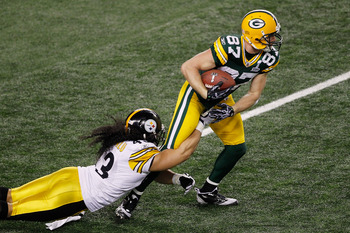
White guys can never be fast. It's a conditioned stereotype. When fans of college football teams see white players at skill positions, they instinctively believe their team is at a disadvantage and that the white player is a liability. Back in 2002, the Kentucky Wildcat started three white wide receivers (who all stood out, as few of the 12-member Southeastern Conference - SEC - schools start one white wide receiver) including the super talented Derek Abney.

The Black players dubbed them "The Snow Storm":
The Wildcats' all-white starting receiving corps of Aaron Boone, Derek Abney and Tommy Cook has combined for 77 catches, 1,235 yards, 13 touchdowns and one catchy nickname. Seems some of the black players on the team have jokingly referred to the trio as "The Snow Storm." Lead storm trooper Abney, generously listed at 5-10 and 172 pounds, now has returned five kicks for touchdowns this year, after taking back two punts last week against Mississippi State. White Lightning is averaging 19.2 yards every time he touches the ball and is the only Division I-A player with at least 450 yards in receptions, punt returns and kickoff returns. His six career kick-return TDs ties the SEC record set by Vanderbilt's Lee "Long Gone" Nalley in the 1940s. "At one particular point it amazed me how tough this kid is," coach Guy Morriss said. "He's taken some shots, and he'll bounce back up like he's made out of Flubber, almost. It's almost like he's sending back a message to the guy that hit him, 'That didn't hurt me.' "

Abney, like so many white receivers before and after him, never got a real shot at the National Football League (NFL), where receivers like Terrell Owens - who recently had an arrest warrant out for failure to pay child support - are lauded by fans, coaches, and analysts for their "speed" and antics on the field that draw attention to themselves.

Drawing attention to themselves is something that that the white receiver (only 15 percent of the receivers in the NFL are white) has a tendency to do, as primarily Black defensive backs laugh when they line up to guard a "white boy." This article from Sports Illustrated back in 1991 illustrates the problem perfectly:
Brian Hartline: One of the NFL's most underrated players
The Taunts start early for Phoenix Cardinal wide receiver Ricky Proehl on most fall Sundays. "Hey, slow white boy!" opposing cornerbacks scream at him. "You ain't going anywhere today. You ain't catching nothing!" 
Proehl thinks the Philadelphia Eagle defensive backs are the loudest, but they aren't alone in singling him out—Proehl's one of only five white wide receivers who were starters for most or all of last season. "Most cornerbacks take it personally when they get beat by a white guy," Proehl says. "Even in practice, when I beat a corner deep, I get compliments. It's like I'm not supposed to do it." 
The preference for blacks is not restricted to the NFL. "When I was in high school trying to get a college scholarship, most of the college coaches would shy away when they found out I was white," says Proehl. And according to New York Jet assistant coach Kippy Brown, when he was a Tennessee assistant in 1990, the other Volunteer coaches "looked at me like I was nuts" when they found out he was recruiting a white receiver. That player, Craig Faulkner, is a starter for Tennessee this fall. 
Nineteen years ago Brown became the first black quarterback in Memphis State history, and he equates the blacks-can't-play-quarterback controversy of years past to the white receivers' situation of today. "The myth about black quarterbacks has been exploded, and it's been proven you have to make decisions based on ability, not skin color," Brown says. "But the mentality of a lot of people in this business is that the white kids can't play certain positions." 
The overwhelming need for speed at receiver and cornerback can be traced to NFL rule changes enacted in 1978. Offensive linemen were allowed to use their hands to thwart onrushing defenders, and defensive backs were restricted to bumping wideouts in an area within five yards of the line of scrimmage. All of a sudden, the quick, small black wideout became a huge factor, and an adjustment had to be made on the other side of the ball. At the end of last season the NFL had only six whites who were starting at defensive back—and none of them were cornerbacks.
Rare is the high school white receiver who gets a scholarship or an offer. Fitting that 1991 was also the year that Ben Brown decided to write a book called Saint Bobby and the Barbarians that documented the Florida State football team under Bobby Bowden, one of the coaches who was influenced by the belief that there were few, if any, white athletes worthy of being recruited to play college football (even laughing at the suggestion of a white running back). On page 75 of that book, we learn about Matt Frier, the last white starting receiver for FSU; he's from a  proud family, and would eventually graduate with a degree in advertising and seamlessly move into the world of regional commerce.

But at FSU, he would have to outwork the other receivers (all Black) for a spot in the playing rotation:
(John) Eason - the FSU receivers coach - noted sarcastically that Frier may have been the victim of a racist stereotype. Because he was white in a position dominated by black athletes, he was assumed to be slow and awkward. But Frier's straight-ahead speed probably put him in the middle of the pack among receivers and running backs. And his desire and toughness were unrivaled. 
Rarer is the white starting wide receiver who earns a scholarship to an SEC or Atlantic Coast Conference (ACC) school.

It is the flashy Black receiver ready to dance after every reception and perform some gratuitous touchdown celebration that fans and coaches have been conditioned to believe can only excel in the either college or the NFL.

Stanford University held a conference on racial stereotyping in sports back in 1995, and a white receiver from that school described his experiences from NFL draft evaluations:

(Justin) Armour, a public policy major, told of his experience in February at a National Football League training camp where he was the only white among 44 wide receivers who were being looked over for the draft. In informal conversations with the mostly white physicians, coaches and trainers, he said, he was frequently asked about his academic work and non-athletics-related plans for the future. The same people, when talking to black players, he said, were not only less talkative but brought up "nothing to do with scholarship." 
During a pencil-and-paper problem-solving test, he said, some of the black athletes pretended to be sneaking a peek at his paper. This joking behavior, he said, was encouraged by league representatives in the room. On the field, he said, coaches made comments when seeing him about having a "smart guy" in the group. Only after the camp was over, Armour said, did it strike him how pervasive the stereotyping had been. "It is perpetuated over and over," he said, by well-educated people. "What scares me about racism is that the majority of it is pretty subtle."

This is not an example of racism, but merely of conditioning. College recruiters will not sign a white receiver (or running back) for fear of being called a 'racist' by other coaches who will tell Black athletes that a rival school favors white players. For other reason but "racism" would a major university disadvantage their offense by signing a slow white athlete to catch passes?

Enter the very white Wes Welker, one of the leading receivers in the NFL. He stars for the New England Patriots, though no team dared draft the former high school Gatorade Player of the Year in Oklahoma. In fact, only one school - Texas Tech - gave him a scholarship, as he had planned to walk-on at Oklahoma State.

Only because former Texas Tech coach Mike Leech saw something he liked in the "frat boy" looking Welker's film, did he offer him a scholarship. For four years, he would be the top receiver for the Red Raiders. Now, he is one of the top receivers in the NFL, though like so many other white high school stars, he almost never got the chance to even play college football.

The same goes for Indianapolis Colts receiver Blair White, who had to walk-on at Michigan State ('walking-on' means that the player didn't receive an academic scholarship and must pay their own way into school, and that they start very low on the totem pole when it comes to the depth chart). The same goes for former walk-on Oregon white wide receiver Jeff Maehl, who despite putting up insane numbers at the 2011 NFL combine, wasn't drafted. Here's what was said of him before the BCS championship game in 2011:
SCOTTSDALE, Ariz. -- The question seemed innocent enough, but Oregon receivers coach Scott Frost didn't view it that way. 
When a reporter noted that wide receiver Jeff Maehl has deceptive speed, often turning short passes into long gains, Frost took exception to the perceived implication. 
"Unfortunately, he's a white receiver so you give him that stereo type," Frost said. "I don't know why you give him that stereotype, but he's gonna run a better 40 time than three fourths of the receiving coming out in the draft." 
Fair enough. Maehl is more than a possession receiver who runs precise routes. His leaping 45-yard touchdown catch in the USC game was highlight-reel material. 
Maehl is aware of the stereotype surrounding "white receivers" and if anything it has worked to his ad vantage. 
"I guess that's just kind of my advantage if teams think I might be slow or something," said Maehl, a 6-foot-1, 184-pound senior from Paradise, Calif. "I'm guessing it's out there in the media and in the back of some guys' heads, that's probably what they're thinking."
Another white walk-on receiver, Mike Hass of Oregon State, would go to win the Biletnikoff Award, annually given to the top receiver in college football. Drafted by the New Orleans Saints, he never got a chance to play in the NFL. Bouncing around between a few teams, he languished on practice squads. But no college team offered him a free-ride; he had to walk-on and fight for everything at Oregon State.

Though one college football site joked about discrimination toward white receivers, the reality of white high school players getting passed over is real.

Tim Dwight, who was nicknamed "white lightning" was once one of the fastest players in the NFL. Sadly, he was used primarily as a special teams player instead of a receiver. The Green Bay Press Gazette wrote an article about the problems facing white receivers in the league, which inadvertently shed light onto one of the reasons there are so few lining up for NFL teams:


"We're a minority," (Brett) Schroeder said. "In many ways being a white receiver is kind of like being an African-American golfer. I don't know why it's like that, but that's just the way it is."
Part of the reason is the NFL has fewer white players than ever. Just 25 years ago, 70 percent of the NFL was white. Now, it's 30 percent.
"The league has changed," NFL analyst and former Cincinnati Bengals receiver Cris Collinsworth said on NFL.com. "It's difficult to compare anything now in the NFL to what it was like 25 years ago."
In 1981, Collinsworth was one of four white receivers to play in the Pro Bowl. He joined San Francisco's Dwight Clark, Denver's Steve Watson and Seattle's Steve Largent.
In the past decade, Denver's Ed McCaffrey is the only white receiver to be selected to the Pro Bowl. McCaffrey made it in 1998 and 1999, but in the last six seasons, no white receiver has been selected.
Tennessee Titans receiver Drew Bennett had a Pro Bowl-type season in 2004 when he had 1,247 yards and 11 touchdowns, but he didn't receive an invitation. After that season, he was referred to as "The Best White Receiver in the NFL." It's a tag Bennett doesn't like.
"I guess you always want to be the best at something," Bennett said sarcastically. "I don't control what people say."
In the last five seasons, there have been 105 1,000-yard seasons, but only two of them — Bennett and Indianapolis' Brandon Stokley in 2004 — have come from white receivers.
"There are plenty of good, white receivers in the NFL," Bennett said. "I'm not going to get obsessed over stats."
But the statistics can be very telling. Last season, only six white receivers — Bennett, Stokley, St. Louis' Kevin Curtis, Atlanta's Brian Finneran, Carolina's Ricky Proehl and Seattle's Joe Jurevicius — finished among their teams' top three receivers. Curtis led all white receivers with 801 yards and Bennett was the only one to lead his team in receiving.
Packers receivers coach Jimmy Robinson has been coaching receivers for 21 years, including 17 in the NFL. Robinson said there's one simple reason why there are fewer white receivers in the NFL than ever before.
"Obviously, it comes down to talent," Robinson said. "Teams are committed to keeping the guys who are the best ones, regardless of color."
During the 2005 draft one of the players who was causing the most commotion was Matt Jones, a 6-foot-6, 230-pounder who played quarterback at Arkansas.
The Jacksonville Jaguars were so enamored with Jones that they took him with the 21st pick.
When the Jaguars drafted Jones, it was the first time in over a decade a white receiver was taken in the first round.
Packers cornerback Ahmad Carroll remembers when he got burnt by a white receiver during his rookie season in 2004 when the Packers were hosting the Titans on "Monday Night Football." The Packers were torched for three passing touchdowns in the 48-27 loss, but the one play Carroll remembers the most was the 11-yard touchdown pass from Steve McNair to Eddie Berlin.
Berlin is white.
"If I get burned by a white receiver, I'm going to hear about it more than if that's not the case," Carroll said. "Anybody who says otherwise is tripping."
Bennett said he has gotten the sense defenders may actually try harder to make sure they don't get beaten by a white player.
"I think they take me seriously. If you're in this league, you can obviously play," Bennett said. "Now, does it bother them a little more if I burn them for a touchdown? Well, you'd have to ask them that."
White guys can't be fast, which means that if a Black defensive player gets beat by one of the "speed" deficient white men in the NFL, they'll take a lot of criticism from other players and coaches. Which brings us to Jordy Nelson of the Green Bay Packers. A former walk-on at Kansas State, Nelson was a rarely used receiver until the 2010 season.

He helped lead the Packers to a Super Bowl title; this season, he has become one of the top receivers in the league (and, along with fellow white receiver Eric Decker of the Broncos, is near the top of league in touchdown receptions). And certainly one of the most talked about, after letting slip the reason for his success. Here's the Washington Post on a "controversy" that would garner opinions and bloviating from ESPN, Rush Limbaugh, and, well, the entire sports world:
“I was talking to ‘Wood’ in the fourth quarter and he said, ‘When you see Jordy out there, you think, “Oh well, he’s a white wide receiver. He won’t be very athletic.” But Jordy sort of breaks all those stereotypes,’” (Aaron) Rodgers recounted during his weekly radio show on WAUK-AM, an ESPN Radio affiliate. “I am not sure why he keeps sneaking up on guys.” 
Jennings, Nelson’s fellow wide receiver and friend, knows exactly why Nelson keeps sneaking up on opponents: He’s white. 
“They underestimate him. And honestly, he uses that to his advantage,” said Jennings, who like Woodson is black. “Seriously . a lot of it has to do with the fact that guys look at him and say, ‘OK, he’s the white guy, he can’t be that good.’ Well, he is that good, he’s proven to be that good and it’s because of the work and the time that he’s put in -- not only on the field but in his preparation off the field.”
Like Dwight, Nelson is nicknamed "white lightning"; unlike Dwight, Nelson was given the opportunity to succeed in the NFL (largely due to injury attrition) and made the most of it. Though his success has been questioned, just like Papale's speed:

When asked by the Green Bay Press Gazette if racial bias is a factor in Nelson's on-field success, he replied: "Honestly, I think it is." 
Nelson and his teammates believe that, with so few elite white receivers in the league, opposing players are likely to dismiss Nelson's abilities on the field. 
"As receivers, we've talked about it." Nelson told the Press Gazette. "I know [cornerbacks coach] Joe Whitt tells me all the time, when all the rookies come in, he gives them the heads up, 'Don't let him fool ya.' That's fine with me."
Wes Welker, the NFL's best receiver

Nelson had to prove his worth to Kansas State coaches as a walk-on, because no college would give him a scholarship. Welker was basically in those shoes, especially as an undrafted receiver. How many talented white high school receivers never get the chance to even lace up their boots in the college ranks, because of the institutionalized bias that only Black people have "speed?"

Steve Sailer pointed out that Matt Jones (whose cocaine addiction ended what should have been a stellar NFL career), the first white receiver drafted in the first round in years, was asked to gain weight to play tight end:
Of course, wide receiver is mostly a black position, so lots of NFL guys tried to talk Jones into playing tight end, a position where whites are more common. Chris Mortensen of ESPN wrote: 
"You know, it's funny," one AFC head coach told me last week. "We asked [Jones] about putting on some weight and playing tight end, and he made it clear that he thought it was foolish. He said, 'So you want me to put on 20 pounds and be a 4.57 guy instead of a 4.37 guy?' When you put that into context, you have to admit he makes sense.
So there is something to what Jordy Nelson intimated. White guys aren't supposed to be 'fast' or play wide receiver. Not at the collegiate level; not at the professional level.

To excel means that they are outliers, freakish white athletes that stand out from the sloth-like masses of white people. In reality, to excel at receiver you must be able to run precise routes (because quarterbacks have timed drop backs that require concise route running from the receiver to operate properly); good spatial recognition (to determine where to make cuts for optimal positioning against a zone defense to get open; and enough speed to get separation from the defensive back.

Plenty of white receivers can and do excel at this; sadly, coaches don't believe white guys have the intangibles and necessary metrics (fast 40 time) to compete at the college level. This is a burden of entry for many talented white high school athletes who are then forced to walk-on if they want to play college football.

And because fans and coaches (and players) have been conditioned to believe only Black people possess "speed," any white athlete who excels at receiver in the NFL will be instantly singled-out by the media and opposing defenses - led by entirely Black corners and safeties - for ridicule. Just ask Brian Hartline of the Miami Dolphins, a white receiver from the Ohio State University. He happens to be one of the NFL's most underrated receivers:

The NFL is a melting pot full of players from every city and every background under the sun. There aren’t many white wide receivers, though. Hartline says he and his teammates have some laughs about that. 
Among the NFL’s top 30 in terms of 2010 receiving yards, Dallas’ Jason Witten and Hartline are the only Caucasians. 
“We have a lot of fun with it,” Hartline said. “No doubt, you hear a lot of talk, along the lines of, ‘That white boy ... don’t sleep on him.’”


Or Mike Furrey, a white receiver who caught 98 passes a few years ago for the Lions in one season, and quickly found himself unemployed the next.

What about Drew Bennett, a white wide receiver who retired from the game in 2009. ESPN The Magazine published this account of the un-drafted, former college quarterback, who went on to be one of the more productive receivers of the 2000 - 2010 years:

On a cool March evening under a clear Spanish sky, he slides out of a rickety wooden chair in a cozy café in Barcelona's Plaza Real. The gangly and goofy American can feel the rubbernecking stare of the natives. He's 6'5'' in a land where men are an average of 5'9''. He wears gray suede Pumas with an orange stripe in a land where people seldom wear tennis shoes. He orders toasted ham and cheese and a beer using butchered Spanish ("Oon bikini ee oon Guinness, poor fevoor") in a land where people speak a language called Catalan. Clearly, Drew Bennett does not belong. 
So, what else is new? 
Forget for a moment that Bennett, in Spain visiting his younger brother Mark, who's a student there, is a white guy playing a position dominated by black guys. Disregard that he's a former backup UCLA quarterback who's now the Tennessee Titans' No. 1 wide receiver. Ignore the fact that he's gone from his childhood home in the Bay Area to Nashville, from the cradle of conservation to a place where recycling means buying another Harley. All of it pales in comparison with the mother of fish-outta-water scenarios: making it in the NFL as an undrafted free agent.


Ask Austin Collie of the Indianapolis Colts, who excelled at Brigham Young University as a receiver. BYU is known for having great quarterbacks who throw to primarily white Mormon receivers, and Collie is easily the best receiver the school has ever produced.

Perhaps his success is fueled partly because he had a good support system at BYU, instead of being constantly ridiculed by his teammates for being a "slow, white receiver." Because BYU actually recruits student-athletes instead of any Black kid who can run a fast 40 time, white athletes aren't unfairly criticized and made fun of; with most of the team being white guys, there a sense of camaraderie that talented white players don't feel elsewhere.

That's the point of sports; to develop sound work ethics and pride in yourself, because you are part of a team.   Recently retired NFL fullback Heath Evans once alluded to the fact that many NFL teams have racial animosity (imagine being one of the few white guys on a team of predominately Black players), and you can understand how white receivers might have difficulty adjusting to a culture dominated by Black morals and social customs.

The same can be said of the college level.

At the high school, it's not a liability to have a white receiver; coaches can't recruit (save at private schools) and can only play those athletes who live in their school district. White receivers excel and develop chemistry with their teammates, but rarely have the opportunity to advance to the next level, because college recruiters have prejudicial opinions of their innate abilities.

In spite of this, talented players like Wes Welker and Jordy Nelson found a way to excel. If that meant walking-on and having Black defensive backs (we won't even discuss the kind of hate Jason Sehorn faced) be dismissive of their talents because they were white, so be it.

It's this simple: sports provide the primary medium where Black people can provide positive contributions to American life. Though trivial, many people derive their entire identity from their alma mater or professional football team they follow (because there is no such thing as an "American Identity" anymore).

Because the concept of Black Supremacy in sports is so ingrained, predominately white sports fans believe that having a white athlete at a position dominated by Blacks (especially wide receiver) that their team is at a distinct disadvantage.

How can they compete against such fast Black players?

Just ask Vince Papale how you compete against coaches and talent scouts who believe white men can't run fast.

Just ask Jordy Nelson and Wes Welker, who never had Rival or Scout salivating over their abilities, and were forced to fight for everything they earned as either a walk-on or as a player given the last scholarship.

How many talented white high school receivers could have developed were they given that opportunity?

White Men Can Run (with apologies to Amby Burfoot), its just a system has been erected that denies the lot of them an opportunity to prove it at the collegiate level. Those that break free then face an even greater burden of proof at the NFL level to showcase their talents, because white guys aren't supposed to be fast.

White Men Can Run... it's just universally accepted and constantly stipulated that they can't. Just ask Jordy Nelson, who is having a tremendous season in spite of his debilitating whiteness.


Monday, September 12, 2011

Rush Limbaugh and Donovan McNabb 2.0: Media Anoints Cam Newton as new Black NFL Quarterback Star After One Game

Yahoo.com goes into full-blown "Donovan McNabb 2.0" mode with Cam Newton
Remember what Rush Limbaugh said about Donovan McNabb back in 2003? We do here at SBPDL, as it ultimately cost Mr. Limbaugh a shot at owning a National Football League franchise. Here's what Limbaugh said on ESPN:
Donovan McNabb has been to three straight Pro Bowls and two consecutive NFC championship games, and was runner-up for NFL MVP in his first full season as a starter.

Still, commentator Rush Limbaugh saw fit to question the quarterback's credentials.

Before McNabb led the Philadelphia Eagles to a 23-13 victory over the Buffalo Bills, Limbaugh said on ESPN's "Sunday NFL Countdown" that McNabb is overrated. However, Limbaugh injected his comment with racial overtones that have set off a controversy.

"Sorry to say this, I don't think he's been that good from the get-go," Limbaugh said. "I think what we've had here is a little social concern in the NFL. The media has been very desirous that a black quarterback do well. There is a little hope invested in McNabb, and he got a lot of credit for the performance of this team that he didn't deserve. The defense carried this team."
The National Football League is 67 percent Black and 30 percent white. The overwhelmingly majority of the fans who follow the 32 NFL teams, purchase tickets and concessions at the stadium, watch the games on television, and play fantasy football are white. Outside of kicker/punter, the whitest position is quarterback, long considered a position that Black athletes were kept from playing because of the "racist" perception among coaches that Black people didn't have the mental aptitude to learn the demanding (War and Peace in size) playbooks, formations, assignments, and ability to read a complex defense as white players do.

According to our friend Richard Lapchick, who broke down the racial demographics of each NFL position over the past 10 or so years, 2009 saw the quarterback position dominated by whites with 82 percent of the available roster spots, compared to only 16 percent for Black athletes.

The high water year for Black participation at the quarterback position was 2002, when Blacks were 24 percent of quarterback roster spots (out of 32 teams, most franchises carry 3 QBs).

It should be noted, that despite being 67 percent of the NFL roster spots - each team has 53 players active - the top players in terms of popularity with the predominately white fan base are the white quarterbacks and white skill position players. In 2010, this was the breakdown of the top selling jerseys for men (by the way, there is nothing more embarrassing than a grown man wearing a football jersey):

  1. Troy Polamalu, Steelers
  2. Drew Brees, Saints
  3. Tim Tebow, Broncos
  4. Peyton Manning, Colts
  5. Tom Brady, Patriots
  6. Michael Vick, Eagles
  7. Aaron Rodgers, Packers
  8. Eli Manning, Giants
  9. DeSean Jackson, Eagles
  10. Mark Sanchez, Jets
  11. Tony Romo, Cowboys
  12. Brett Favre, Vikings
  13. Miles Austin, Cowboys
  14. Adrian Peterson, Vikings
  15. Clay Matthews, Packers
  16. Philip Rivers, Chargers
  17. Chris Johnson, Titans
  18. Ray Lewis, Ravens
  19. Wes Walker, Patriots
  20. Donovan McNabb, Redskins
  21. Jason Witten, Cowboys
  22. Peyton Hillis, Browns
  23. LaDainian Tomlinson, Jets
  24. Larry Fitzgerald, Cardinals
  25. Hines Ward, Steelers
Tim Tebow's jersey is still a big seller and he has the same skill-set as Newton
Fifteen of the top 25 selling NFL jerseys are white players, the bulk being white quarterbacks like Drew Brees, Tom Brady and Peyton Manning, who put a white face on a game dominated by thugs like Ray Lewis (yes, the evidence points to him being either an accessory to murder in Atlanta or the individual who killed someone back in 2000). Pittsburgh Steelers are fiercely loyal to their team, so the outliers like Polamalu and Ward. Notice that white receiver Wes Welker and beloved white running back Peyton Hillis are in the top 25, illustrating the obvious fact that the predominately white fan base cheers for the players that excel at positions they have been conditioned to believe only Black players can excel at. 

Let's take a look at the jerseys that are most popular with women (these are cut in a sexy manner that accentuate the female body):
  1. Troy Polamalu, Steelers
  2. Peyton Manning, Colts
  3. Drew Brees, Saints
  4. Aaron Rodgers, Packers
  5. Tom Brady, Patriots
  6. Tim Tebow, Broncos
  7. Miles Austin, Cowboys
  8. Eli Manning, Giants
  9. Tony Romo, Cowboys
  10. Jason Witten, Cowboys
That list is strikingly white, with only one Black player (a light-skinned one at that). Dominated by white quarterbacks, it's obvious that the NFL's ability to attract white women is through the quarterback position.

Thus the interesting dilemma the NFL is faced with in 2011, with Indianapolis Colts star Peyton Manning potentially sidelined all season due to his third neck surgery. White quarterbacks are vital to the continued success of the NFL - well, establishing white stars in the receiver, linebacker, safety, and running back position, as evidenced by Peyton Hillis's selection to be on the cover of Madden NFL 2011 resonate with the white fan base too - as no one wants to see the league become just another thugged-out, explicitly Black National Black Association (NBA).  

The NBA went all-in on Blackness, hedging their bets that white fans would continue paying to see overpriced criminals play basketball; it hasn't turned out to be a great investment.

Oddly, the NFL and the fawning media that covers the sport (the monopoly that should be broken up, ESPN; the embarrassingly bad NFL Network; FOX, CBS, and the entire Associated Press) seem intent on turning the game into just another version of the NBA. Dez Bryant is the face of Black NFL, a walking caricature of every negative Black stereotype you can conjure; the Black quarterback that was supposed to revolutionize the game, Michael Vick, spent two years in jail for participating in the inhumane sport of dog fighting, showcasing the massive divide in the cultures between white and Black people.

With Manning down, the NFL is going into Donovan McNabb Version 2.0, hoping to push another Black quarterback to the stratosphere of popularity and name recognition among the white fan base. Tampa Bay has the overrated Josh Freeman, a mulatto quarterback who played good football in 2010; Oakland has Jason Campbell, a quarterback whose erratic play is eternally excused and blamed upon having to learn a new offense every year (perhaps the guy just can't make good decisions and isn't that intelligent?); Seattle has Tarvaris Jackson,  who is somehow a starting quarterback in the league despite not possessing the talent to start for an Arena League team; Minnesota trots out McNabb, who should have retired two years ago to protect his legacy; and Philly has Michael Vick, whose two years in jail allowed his body to heal from the blows he took from scrambling before his dog fighting avocation became public.

Which brings us to the Carolina Panther's Cam Newton, the Black quarterback that is being hyped as the next Peyton Manning:
On Sept. 6, 1998, the Indianapolis Colts welcomed the Miami Dolphins to what was then the RCA Dome to see their new quarterback, first overall pick Peyton Manning (notes) . At the end of the game, Manning had thrown 21 completions in 37 attempts for 302 yards, one touchdown, and three interceptions.

It wasn't the most auspicious debut, but Manning threw for more than 300 yards in his first pro game, something no other rookie quarterback had done before. The Colts lost the game — they would win just three that season — but it was certainly a sign of things to come. And as we now know, Manning played in every game from then to now as Sunday marked the end of his 208-consecutive games started streak.

There was a first-game passing yardage record that exceeded Manning's, but it comes with a pretty heavy asterisk. Otto Graham of the 1950 Cleveland Browns threw for 346 yards in his NFL debut against the Philadelphia Eagles on September 16 of that year, but he spent the four previous seasons in the All-America Football Conference, which merged three teams (Cleveland Browns, San Francisco 49ers , and an earlier version of the Baltimore Colts) with the NFL before the 1950 season.

Surprisingly, Sunday also marked the end of whichever yardage record you care to recognize. Another first overall pick, Cam Newton of the Carolina Panthers , broke that mark going away by passing for 422 yards. Not only did Newton obliterate Manning's record for the first game of any rookie career, he did it on the road (versus the Arizona Cardinals ) and with a truncated preseason due to the lockout. Unfortunately for Newton, the Panthers fell short, 28-21, but that's not what will be remembered about this game.
NFL.com dedicated its front page to Newton, with a story Lights, Cam-Era, Action. Despite losing the game (and being outplayed by white quarterback Kevin Kolb, who was forced out of Philly), the media is going into overdrive to anoint Newton as the heir-apparent to Peyton Manning, perhaps the most popular player in the NFL, especially one who routinely is signed to lucrative endorsements.

ESPN, sports call-in shows across the nation, and dead-wood media will spend countless hours and waste words praising Cam Newton's debut performance to no end. Despite the NFL tweaking rules that benefit that offense - the networks want high scoring games - and creating a quarterback-friendly game, the media will stop at nothing to paint Newton as Donovan McNabb 2.0.

Sadly, there's no Limbaugh in the media to point this out and cause a hilarious controversy.

Newton might be an outstanding talent, but NFL defenses have been so handicapped when it comes to hitting - to protect players - and how opposing defensive backs can play receivers that an NFL quarterback that doesn't throw for more than 300 yards is having a bad day statistically.

Once again, white fans keep the NFL afloat. They buy jersey's of white players (especially women), primarily quarterbacks. Rumors persist that Danny Woodhead's jersey, a white running back from New England, has one of the NFL's best selling jersey's as well. White fans tolerate a primarily Black league because they have been conditioned to believe that only Black athletes can legitimately play the running back, receiver, and corner/safety position.

As we at SBPDL have shown, discrimination towards white athletes begins at the high school level where college recruiters refuse to recruit white running backs, receivers or safeties. Tom Lemming, perhaps the best recruiting guru in the nation, told Michael Lewis in The Blind Side that white high school players are discriminated against, hell, he'll tell anyone this fact.

The same principles that dictate who gets recruited in college hold true in talent evaluations for the NFL. See this article on the 2011 NFL Draft, courtesy of SBPDL.

So the media crowning Cam Newton as the "new Peyton Manning" need to be called to task: this is nothing more than Donovan McNabb 2.0. The league's financial future rests upon white women being attracted to the game (because single Black women have a net worth of $5), and white guys living vicariously through white quarterbacks, receivers, bad ass linebackers like Clay Matthews, and white running backs like Hillis.

Cam Newton? He grew up in College Park, Georgia, an area white people assiduously avoid and only mention because of high Black crime rates, a scary MARTA station, and the fact that Newton is from there.

Remember: without sports to manufacture positive images of Black people, Black-Run America (BRA) would collapse overnight. Much like the media's desire to see a Black quarterback succeed, eventually Project Donovan McNabb 2.0 will fail.

Newton might have some success, but he could end up like JaMarcus Russell and Vince Young. But with offensive and defensive rule changes that continue to benefit the quarterback and a passing offense mentality, the NFL was bound to be find the right mixture to finally of rule tweaks to see a Black quarterback succeed.

But after one game - when he was outplayed by Kevin Kolb - to anoint Newton as the "new Manning" shows you the "BRA agenda" all too perfectly.