Showing posts with label public transportation. Show all posts

Saturday, June 2, 2012

Minority Participation or We Riot: A Simple Reminder Why Public Transportation Doesn't Work (Or anything else in Government)

Public transportation could work in America. No really: public transportation could work in America. Government could work too.

The problem plaguing both is simple, yet not open for discussion or debate.

Now, a Black Alderman in Chicago reminds us once again of the terrible of Black-Run America (BRA), with the Chicago Sun-Times reporting:
An influential alderman warned Metra’s executive director on Thursday that “people are going to get hurt” if the commuter rail agency fails to bolster minority participation on a $133 million South Side railroad bridge known as the “Englewood Flyover.”
Ald. Anthony Beale (9th), chairman of the City Council’s Transportation Committee, did not explain who he believed would “get hurt” or who the perpetrators might be. But, he was clearly referring to civil disobedience or maybe even violence at the construction site.
“I’m trying to help you help yourself. When I say that, problems could arise. When you look at a community like Englewood [that] is challenged and you have over $1 billion of work coming through and there’s no people of color working on that project, I’m afraid people are going to get hurt,” Beale told Clifford during Thursday’s committee hearing.

“When you look at the make-up of the community — when you look at the unemployment rate … in that particular community, it’s probably 35, almost 40 percent. … To have a contract come like this in the African-American community with less than one percent minority participation is an insult.”
Where did all this start? This demand that a certain percentage of contracting jobs go to the Blacks? Well, once again you realize that there is no such thing as a "free market" in America, but the manipulation of capitalism to enrich those whose melanin levels are enriched to the correct hue. From a 1985 article in the Orlando Sentinel titled In Atlanta, Minority Roles Yield Mainstream Gains:
Eleven years ago, Tom Cordy borrowed some money to start a residential heating and air-conditioning firm. For the first few years, his family lived off his wife`s salary and Cordy pumped every dollar he earned back into his business.
Today, Cordy`s firm is installing a fueling system at Chicago`s O`Hare Airport and working on Coca-Cola`s expanded Atlanta headquarters. He is on the boards of Cox Enterprises, First Georgia Bank, Southern Bell and Kimberly- Clark.

This Horatio Alger story may not have been possible, Cordy says, without the existence of minority-participation programs, in which a certain percentage of construction money is set aside for minority-owned firms.
The City of Atlanta`s program, one of the nation`s largest, has opened otherwise closed doors for hundreds of minority businessmen like Cordy and served as a model for other cities.
``Right now, the airlines select us not because we`re a minority firm but because we`re good,`` said Cordy, owner of AMC Mechanical Contractors Inc., of Atlanta.
``It`s the chicken and the egg predicament. You`ve got to have the opportunity before you can develop a track record. It`s just like (when) you go to apply for a job and they say, `We just look for people with experience.` ``
The $400 million expansion of Atlanta`s airport gave Cordy his first shot at building fueling systems. O`Hare will be his fifth such project.
The airport project also proved a test for the city`s set-aside program for minority firms. Maynard Jackson, who became Atlanta`s first black mayor in 1974, mandated that 25 percent of all city contracts would go to minority- owned businesses. When white contractors balked, Jackson held up airport construction until they complied.
``I heard we carried the affirmative action standards for the (Federal Aviation Administration) for the whole country,`` says John Matthews, deputy director of the city`s economic development office, with a chuckle.
Since then, the city`s policy has by and large been a success story. The standard has been raised to 35 percent, and several major corporations located in the city have implemented similar programs.
It has become a matter of pride for Atlanta, which calls itself ``The City Too Busy To Hate.``
``It`s getting to a point now that nobody even bats an eyelash,`` said Matthews, who negotiates with companies for minority participation. ``As a matter of fact, most of the developers I talk with -- and we`re talking about projects ranging from $500,000 to $10 million -- they say, `Oh, yes, we all agree with that,` and off we go.``
In 1973, the city signed less than 1 percent of its contracts with minority- owned firms for a dollar value of $42,000. In 1984, the figures were up to 30.7 percent and $12 million. More than 400 firms have received certification as minority-owned or bona fide joint ventures between white and black businesses.
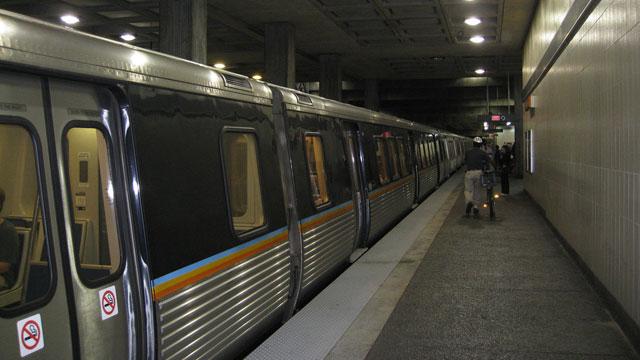
MARTA, the city`s mass-transit operation, has had a policy of minority participation since 1971. Sixteen percent of its $2 billion rapid-rail construction has gone to minority-owned firms, and MARTA`s current standard calls for 20 percent participation.
The transit authority was the first in the country to require minority participation in the manufacture of buses and rail cars and has sought minority-owned suppliers for communications and signalling equipment.
The authority included a commitment to equal opportunity in its campaign for an additional 1 percent sales tax to help finance MARTA, said John Schadl, assistant to MARTA`s general manager.
``That translated into a very strong minority business commitment,`` he said. And support from black voters in the approval of the tax.
Fulton and DeKalb counties, in which the city is located, have standards of 20 percent and 15 percent minority involvement, respectively.
Coca-Cola Co., based in Atlanta, also has maintained a minority-participation program since 1981. Its current $100 million expansion project includes 35 percent involvement from minority firms. The company also has worked with more than 1,200 minority suppliers in its divisions, including purchasing, banking, advertising, bottling franchises and wholesaling.
 Affirmative action programs should have had their last stand  in Atlanta, but somehow they survived. They morphed into simple extortion.

Tuesday, March 27, 2012

Public Transportation Could Work, Part II: If it wasn't for Black-Run America (BRA)

Lawrence Auster has highlighted one of the most honest pieces of journalism printed in an American newspaper in... in... well, just read these choice lines from The Washington Times piece for yourself:
Crash at the DC METRO in 2009: 97 percent of bus and train operators are Black in the WMATA
Ninety-seven percent of the bus and train operators at the Washington Metropolitan Area Transit Authority are black, with only six white women out of more than 3,000 drivers, according to Metro documents — a lack of diversity at one of the region's largest employers that has led to an acknowledgment of failure in affirmative-action documents and spawned a series of lawsuits. 
It is a culture in which a white male engineer near completion of a Ph.D. was passed over for a management position in favor of a black man who was barely literate, multiple staffers said.  
"The average rider wouldn't believe the things that go on. There are so many easy things we could do to make the system better," a station manager said. "But they'd never put me in charge because they know I'd make sure others actually did their jobs. They don't want change. It's go along to get along." 
White and Hispanic employees who allege discrimination have found a deaf ear at Metro's civil rights office, whose 17 employees are black. Until at least 1999, that office tracked complaints via a handwritten ledger on a series of taped-together sheets of paper, a copy of which was obtained by The Washington Times. The system "made determining statistics impossible," said a civil rights employee from the time. 
First-line managers 

Of a dozen senior supervisors overseeing the rail division in 2007, 10 were black and two were white, and five black supervisors, all with less than a year of tenure in the position, were paid more than both whites, who had more seniority — one with 20 years — personnel records obtained by The Times show. 
The group making more money includes senior supervisors such as Orlando Terrell King, who has been charged with reckless endangerment and fraudulently attempting to obtain a driver's license, according to Maryland state records. Mr. King, who is paid $62,536, was promoted by Metro to oversee those who drive trains carrying thousands of passengers daily. 
Also rising rapidly to senior supervisor was Robbie O. McGee, who spent eight years in federal prison for felony distribution of PCP while on probation for another crime. He received five pay increases at Metro in two years.

Public transportation could work, but The Washington Times has poignantly articulated why it doesn't. The WMATA amounts to a job program for otherwise unemployable Black people, helping to create a faux Black middle class in the process. Auster, in his usual matter-of-fact analysis, cuts to the heart of the problem with this Black scenario in Washington D.C.:
That is just an amazingly frank description of a black-run institution. Mainstream conservative outfits such as the Washington Times never speak about blacks in such honest terms. Is this the sign of a turn? Is the nation of cowards--or at least its conservatives--about to start speaking the truth about race? 
But I'm being silly. Of course conservatives are not about to start speaking the truth about race. Conservatives will see the above-described problems in the Washington Metro system as due to affirmative action and race preferences, not to the character of black people. Get rid of the "soft bigotry of low expectations," and blacks will do just as well as us! 
But As I've said many times, the ultimate problem is not race preferences; the ultimate problem is characteristics of blacks. If you had a city that was overwhelmingly black, as D.C. is, then your municipal employees, your transit officials, your police officers etc. are going to be overwhelmingly black. And because blacks operate at a vastly lower level of intelligence and probity than whites, such a city will sink into African-style incompetence and corruption, even in the complete absence of black racial preferences. But conservatives NEVER see or acknowledge this basic truth. Being liberals at their core, they only see the problem as procedural (caused by bad policies such as affirmative action), not as substantive (caused by the nature of black people).

Where, oh where could a city be found to validate Auster thesis of a city that is overwhelmingly Black (D.C. is not anymore, with Black people being forced out to Prince George's County and Baltimore) and that has a government full of municipal employees, transit officials, police officers, and other personnel paid via public funds which also is on the verge of total collapse?

Yes, you guessed it. Detroit.

We already know that more than 100 bus drivers in the Detroit Department of Transportation (DDOT) refused to work because "they were scared for their lives" after numerous attacks on the Black drivers by young Black people. Instead of driving their routes, they stayed in the Rosa Parks Transit Center (not to be confused with the Rosa Park Hempstead Transit Center in Long Island) without one employee realizing the irony of the situation.


The city is 89 percent Black, boasting a political structure that is entirely - and proudly, if not defiantly - Black. So, how well does the Detroit Department of Transportation's (DDOT) bus service perform? Not too difficult to surmise that, just like the city government, DDOT is perhaps the worst public transportation system in the nation:


After less than a week on the job, Detroit Department of Transportation CEO Ron Freeland painted a grim portrait of Detroit's bus service at a Monday City Council meeting.

DDOT's on-time performance is 65 percent, compared to the industry standard of 85 percent. Buses miss service on 33 percent of their stops every day. Freeland said the department's monthly parts repair bills far exceed national standards and that poor maintenance has forced the department to take on about 70 more buses than it needs.
The report-back comes after Mayor Dave Bing announced last week that Freeland would head DDOT, joining the private management team hired to run the bus department as the city looks to save money on its operating costs.

Detroit in January contracted bus operations the firm Parsons Brinckerhoff, which has subcontracted to a firm called Envisurage.
With the new management come drastic service cuts for DDOT riders. The department announced it will end 1 a.m to 4 a.m bus service and eliminate some routes beginning Saturday. More than 100 bus drivers and mechanics will be laid off.

A transportation system that is completely run by Black people, because Detroit is a city that is 100 percent a reflection of Actual Black Run America (ABRA); with both on the verge of collapsing:
But bus riders and drivers in Detroit say they don't know if the beleaguered system can stand any more pain. At a downtown Detroit bus stop, Toni Coleman feels frustrated. The bus is late again, and now she will be late to work, too.

"Now I'm having to get off work almost an hour earlier because I can't get on a bus at 5 o'clock," Coleman says. "The buses are too crowded, and they don't stop. Hours' worth of pay because of the changes in the bus system." 
Coleman is one of more than 100,000 Detroiters who depend on buses for daily travel. There have been fewer travel options of late, after the city cut overnight bus service and eliminated several routes. Unlike many major metropolitan areas, Detroit has a second, separate bus line that serves roughly 40,000 suburbanites and drops them off in the city during the morning and evening rush hours.
A glimpse of what life in a dying city looks like, a civilization incapable of taking care of itself were it not for the tax-payers of the state of Michigan subsidizing the Black metropolis of Detroit, and the federal grant and aid the city receives as if it were some pitiful third world nation.

But what is life like in a city whose heart is still beating, albeit courtesy of the primarily white tax-payer, whose transit system primarily moves Black people through the metropolis? MARTA's riders are 78 percent Black, and it should be a shock to anyone that the monetarily failing public transportation system in Atlanta is nothing but a jobs program for Black people (78 percent of the employees are Black in a city that is roughly half-white) as well as DC's Metro:
The Metropolitan Atlanta Rapid Transit Authority (MARTA) board met on Monday and selected an executive search firm that will recruit MARTA's next general manager. This past December, MARTA's general manager Rick Simonetta resigned to become CEO of a Pennsylvania video technology firm. After passing over two well qualified African American MARTA vice presidents (Nat Ford, Executive Vice President for Operations & Development and Gloria Gaines, Vice President for Planning & Analysis, the MARTA board selected Jack Stephens as its interim general manager. Stephens was vice president of customer development. In its 29-year history, MARTA has had five general managers. All of them have been white and male. 
The Clayton County MARTA board representative headed the search committee. The committee report was called into question after it was brought out that a black-owned executive search firm had obtained the most votes in the committee, but after a recount it was later announced as having the second highest votes. Although split, the full MARTA board voted for a non-minority firm to run the search for a new general manager. "We don't trust MARTA's search committee process. Why is it that a Clayton County board member chaired the search committee? Why wasn't a Fulton or DeKalb MARTA board member, whose residents have been paying the one-cent MARTA tax for the past 25 years, selected to chair the committee, " stated Sherrill Marcus, an organizer with the Metropolitan Atlanta Transportation Equity Coalition (MATEC), a coalition of seventeen grassroots community organizations. 
MATEC members have opposed the MARTA fare hike that will take effect this January 1, 2001. They also emphasized that MARTA is a big business with an annual operating budget of over $300 million. Since 1979, MARTA has collected over $90.1 billion from the one-cent sales tax. The MARTA tax is collected only in the Fulton and DeKalb Counties. 
"We strongly feel that it's time that we had a black general manager at MARTA," said DeKalb NAACP director John Evans. Evans is a former MARTA board member. African Americans currently make up 75 percent of MARTA's riders. African Americans also comprise 78 percent of MARTA's 5,325 employees. "There are able African American transit managers around the country who could run MARTA," stated Robert D. Bullard, director of the Environmental Justice Resource Center. Bullard stressed the fact the current Secretary of the United States Department of Transportation is African American. The former administrator of the Federal Transit Administration, Gordon Linton, is also African American. African Americans head four of the country's 30 largest transit systems. African Americans hold the top transit positions at the Boston-MBTA (Robert H. Prince, Jr.), Baltimore MTA (Ronald L. Freeland), Detroit DOT (Sandra Bomar Parker), and Houston Metro (Shirley A. DeLibero). 
Why has MARTA never had a black general manager? There appears to be a "glass ceiling" at MARTA for African Americans. There is also strong evidence that all of the racial hurdles for African Americans at MARTA-from the selection of the current interim general manger to the selection of the executive search firm for the permanent general manager- have not been overcome. MARTA prides itself as an Equal Opportunity Employer. This principle needs to apply for all positions at MARTA, including the general manager position.

In a sane nation, the citizenry would be able to ride public transportation in a cheap, clean, and safe manner. As an alternative to costly commutes via car (in opportunity costs, gasoline, and time away from ones family), having effective public transportation is the best way to gauge the true strength and vitality of a community.

Looking at the state of public transportation in Black-Run America (BRA) - and in ABRA Detroit - it's obvious we aren't much of a nation at all. We are a nation dedicated to uplifting Black people in every vocation - and avocation - at the expense of the health of the overall nation. To admit Black failure - and culpability in augmenting that failure - would undermine the whole system.

The Washington Times, by publishing this expose of sheer Blackness in the METRO system in Washington D.C. has shown the way to defeating BRA: the pen is mightier than the sword.


Tuesday, October 11, 2011

Public Transportation Could Work...

Portland's public transportation works beautifully. Why is that?
It has been argued here that the spread and proliferation of the Black Undertow comprise the great ecological threat to mankind (and the concept of sustainability), as real, discernible Climate Change brought about by the Black Undertow keeps most other races from utilizing public transportation.

In cities like Montgomery, where a bus-boycott galvanized a nation to accept sweeping Civil Rights legislation (that lead to directly to Black-Run America), it is only Black people who now ride that antiquated - and dangerous - system:
In 2011, 83.6 percent of the people who ride the Montgomery Area Transit System (MATS) are African Americans, even though African-Americans are 54.5 percent of the population of Montgomery. Whites are 42.3 percent of Montgomery residents, but are only 12.7 percent of MATS riders.
White people in Montgomery have fled the city to create new suburbs, which require them to drive their cars to and from their places of employment, contributing unnecessary amounts of carbon emissions into the atmosphere. All to avoid riding in buses next to Black people.

In Atlanta, more than 76 percent of the riders of MARTA, which just approved a fare increase to become the most expensive - and poorly managed - public transportation commute in the nation, are Black people. White people in Atlanta have fled to outlying suburbs throughout the metro area, where no MARTA station can be built to allow a criminal element to enter their shining Whitopia.

Atlanta has the wost traffic in the nation because white people living in the suburbs are trying to escape the Black Undertow and would rather spend 10 hours a week in the car (commuting two hours a day to and from work) than allow MARTA into their towns. Think about that for a second.

The same is said of Washington D.C., where the DC Metro is basically a job program for Black people with more than 90 percent of the employees being Black - though DC is almost majority white... talk about disparate impact - and Black people make many of the stops no-go areas. yes, white people ride the Metro to work, but DC still has some of the worst commutes in the nation because of a desire to live away from the wondrous diversity we constantly hear makes our nation great and a greater desire to avoid riding next to them on the Metro rail and bus system.

In Cleveland more than 85 percent of the citations issued to customers not paying for a ride on the public transportation there have been Black people.

Atlanta's MARTA system is broke; 76 percent of the riders are Black
US News and World Report did a list of the Top 10 American cities for Public Transportation, and no city with a majority Black population cracks the list. In fact, eight of the cities have small to negligible Black populations. LA and New York are on the list because having a car in the latter city is an insane proposition. Public transportation works in San Diego, Portland, Boston, Seattle, Denver, and Salt Lake City because there are low Black populations there to loiter, skip out on paying for fare, and making the systems inhospitable to people desiring a peaceful trip to work, a sporting event, or other service. Phoenix has an outstanding trolley system as well.

Those who have dedicated their lives to environmentalism, protecting the environment, creating energy independence in America and a move away from our dependence on importing fossil fuels and other green causes are hypocrites unless they are willing to understand why white people (and Asians and other non-Black people) flee Black Undertow cities and refuse to ride public transportation in cities like Memphis, Atlanta, St. Louis, Cleveland, Birmingham, etc.

They are hypocrites who live in places like Boulder, Austin (Texas), Portland, Seattle, and Burlington (VT) where few eyes every are set upon a Black individual and riding public transportation is a safe and clean activity.

Civilization is a very precarious thing. Looking at why cities collapse and why cities (and regions) thrive is a messy business, because the data provides patterns that run counter to the egalitarian ideology touted by Disingenuous White Liberals who enforce BRA at every turn. Detroit vs. Pittsburgh is not a football match-up; it offers a simple look at why one city survives and the other is on life-support.

The Blaze.com provides a video from the New York Subway System which serves as a metaphor for why people flee the Black Undertow - no, not because of the Black gangs roaming the subways with box cutters - and sadly no one points out that this same behavior isn't found on the public transportation of lily-white Portland, Seattle or Salt Lake City. These cities work (as do their public transportation systems) because white people, regardless of their political orientation, can maintain civilization and high standards of moral behavior in public.

Black people? Well, you be the judge of it:
You’ll want to put headphones on or turn down the volume, because the video you’re about to see is full of screaming and chaos.
It shows several NYPD officers in Harlem attempting to arrest four girls who had tried to board the subway without paying the fare. The girls resist arrest — but that might be an understatement. WNYW-TV explains:
One girl is seen swinging a bag at the officer while others try to pull away as they’re being handcuffed.  One of the officers pulls out and swings his billy-club in a defensive move as he is attacked.
The same girl with the bag can also be seeing kicking one of the officers.
Strangely, despite similar moments of Blacks Behaving Badly (BBB) on public transportation in cities all across the country, some Herman "Munster" Cain fan at The Blaze left this comment:

LIBSALWAYSLIE
Posted on October 11, 2011 at 10:18amThis is a clear example of what the liberal democrats have done to (some) blacks, they’ve turned them into idiots who belive the law does not apply to them. Liberals disgust me.
Why don't Disingenuous White Liberals riding public transportation in Seattle, Portland or New York City (home to hundreds of thousands of Stuff White People Like white people) act this way? Why do these "liberals" have the ability to turn (some) Blacks into idiots who belive (sic) the law does not apply to them?

For the same reason that disciplinary measures in schools across the country is disproportionately targeted at Black people misbehaving; the same reason that Black males - though only 5 percent of the population - are more than 50 percent of the prison population and commit (according to 2010 FBI stats) more than 50 percent of the murders in America.

This is exactly why white people avoid public transportation in cities with high populations of Black people; the inverse is true, as the lack of Black people riding public transportation in cities with low populations of Black people makes for an enjoyable trip.

What other cities have horrible public transportation that citizens avoid and instead waste countless hours driving in their cars to avoid the Black Undertow? Philadelphia? Remember, most public transportation is in some ways subsidized by the federal, state, or local government.

Public transportation could work, but the Black Undertow makes such efficient forms of transportation an impossibility for those living in Whitopias who hope to maintain high property value. For those living in cities - like Portland, Seattle, Salt Lake City - with a minimal Black population, this isn't a problem. Public transportation works there.