Showing posts with label Making it Rain. Show all posts

Tuesday, January 18, 2011

#432. Celebration-less Touchdowns

Black people just being Black
Professional athlete, as we have learned, is the vocation of choice for young Black males. The majority of Black males grow up believing they will one day make it to either the NBA or the NFL and that though the taste of riches may be fleeting, “making it rain” for a few years will be worth every penny lost that would have gained compound interest sitting in a bank.
Black athletes compete not only for playing time as professional athletes, but also for endorsements dollars against fellow athletes. This means that the optimum place to showcase their skills will be on ESPN Sports Center, a daily telecast highlighting the top plays from the prior day's sporting events.

One-handed catches on the gridiron, monster "poster material" dunks on the basketball court and long runs through a maze of defenders only to eventually penetrate the end zone are what the producers at ESPN continuously highlight and the viewer craves watching.

But one of the more intriguing highlights ESPN promulgates is the end zone dance, the spontaneous celebration of Black individuality and creativity after a player has scored a touchdown (though the practice of Black braggadocio is becoming increasingly ubiquitous, seen after minor pass breakups by corners and even five-yard receptions by Twitter happy receivers).

The end zone celebration was a ritualistic dance notoriously performed in the 1980s with impressive flair and increased levels of team participation coupled with intensely choreographed maneuvers. The NCAA quickly moved in to limit these celebrations and subjugate offenders of flagrant celebration with the dreaded "Miami Rule": 
College football players planning to punctuate scoring plays by high-stepping into the end zone, somersaulting over the goal line or waving the ball at their beaten opponents better get it out of their system this season.
Nearly two decades after the creation of the so-called "Miami Rule," the NCAA is taking another step to reduce taunting, a harsher penalty for the guilty party that could take points off the scoreboard starting in the 2011 season.


It all goes back to Miami's 1991 Cotton Bowl rout of Texas, when the Hurricanes committed a school-record 16 penalties, including nine for unsportsmanlike conduct.


That performance resulted in the institution of a 15-yard penalty for any player engaging in prolonged celebrations or taunting.


Fast-forward to April, when the NCAA approved a rule that wipes out a touchdown if a player taunts his opponents en route to the end zone. Instead of getting six points, the team would be assessed a 15-yard penalty from the spot of the foul.


The harsher rules don't sit well with former Hurricanes receiver Randal Hill, who despite a standout career probably is best known for his touchdown celebration in that '91 Cotton Bowl. After scoring a touchdown, Hill ran into a stadium tunnel, then emerged while pretending to fire a pair of six-shooters.


Hill admits that some of the things he and his teammates did "were over the top" but derides the NCAA as "stuffy guys" searching for ways to take the fun out out of the game.


"I think it's sad," said Hill, who works as a special agent for U.S. Homeland Security. "All these guys that are making the rules? Get rid of every single one of them and put people in there that understand more about the game.


"I guarantee you, the fans don't want to see a snooty, boring game."
Excessive celebration is banned in college sports, but the professionals (especially the NFL) have the market cornered on gaudy end zone dances, mugging for the camera after big hits on defense and the primeval yell that ejaculates from the throat of the athlete upon securing a big catch or extended a drive with a long run.

Black players make up 70 percent of the NFL athletes and 80 percent of the NBA players. If a study were undertaken to determine which race garners the most unsportsmanlike/excessive celebration penalties in the NFL and technical fouls in the NBA, SBPDL believes these would be 90-95 committed by Black players.

It is rare to see excessive celebration called in the NFL, but in a recent playoff game a critical mistake was made by the New York Jets that resulted in a 15-yard penalty. That mistake? A Black person scored a touchdown and that player decided to grandstand for the crowd and the viewing audience at home:
When you talk big, you'd better back it up. And if you back up the big talk, you deserve to celebrate even bigger. That wasn't a problem for the New York Jets during and after the team's decisive 28-21 victory over the New England Patriots in the AFC divisional playoff.

A bit of the celebration didn't please CBS announcer Jim Nantz, though. After Shonn Greene(notes) scored a late game-sealing touchdown, many Jets, Rex Ryan included, converged in the end zone to whoop it up and send one final message to the Patriots and their fans. Nantz didn't like this, particularly Greene's "nap time" celebration, which saw the running back fall to the ground and mimic that he was going to sleep.

"I've never understood the absurdity of all the self-aggrandizing and now you're going to cost your team 15 yards on the kick and you're going to give Brady and his unit a chance to do something."

All right, Jim. Come on down from that soapbox and let's talk about this. You're right that it's absurd for a player to cost his team 15 yards for an incident that was completely unnecessary. And you're right that Brady and his team were going to get another chance to do something. But did you have to go with "absurdity" and "self-aggrandizing" when ripping Greene's celebration? You know who's self-aggrandizing? People who use the phrase "self-aggrandizing." I assume you've been introduced to the pot and the kettle, Jim?

The real culprit here is the NFL for having lame rules in place that penalize players for having fun. Greene didn't get flagged for doing something wrong -- like taunting or disrespectful behavior --  no, he was penalized because he intentionally fell to the ground in the course of celebrating a touchdown. That's all.
End zone celebrations are an unwritten, de facto right for Black players to display effortless cool (though none have pulled off a Clarence  yet) and an opportunity to gesticulate and contort their bodies in ways that display the sportsmanship that sports fans have come to know and expect from Black athletes.
Black people really, really love being Black. No Self esteem issues here

Though the game may be in doubt, Black athletes on a team losing by 30 might taunt the opposing team with an exaggerated, multifaceted celebration that oozes with Black machismo.

You see, Black people have no shame and are normally completely unaware of their surroundings. Being quiet at a movie? Impossible for Black people, though before every movie people are implored to refrain from speaking during the viewing of the film.

Using 6-inch voices like our teachers told us was polite to utilize in public places? Nope, Black people believe in the 40 foot voice rule, demanding that everyone within ear shot be party to their conversation.

This is why football players (and to a less extent basketball players) must celebrate every play that just might conceivably -- possibly, maybe -- merit even the smallest accolade. It's only natural for Black people to be the center of attention and with tens of millions watching and television, the opportunity for endorsement dollars and precious ESPN highlight reel time translates to excessive dancing upon scoring a touchdown. Or making a five-yard catch. Or breaking up a pass. Or sacking a quarterback. Or... pretty much anything that can be counted as a positive play - involving a Black player - will inevitably end in a celebratory manner that screams of a two-year old engage in a temper-tantrum.

Perhaps one of the primary reasons Black athletes enjoy showing-off and demanding attention on the athletic fields is due to a heightened level of self-esteem that removes any of the moral inhibitors that keep white athletes from engaging in similar behavior?

It is a well-known fact that Black people are blessed with the highest rates of self-esteem of any of the racial groups in America (maybe even the world). Why do Black people have the highest self-esteem, when it would seem they should be the least racial group participating in boasting?

That will be discussed tomorrow.

For today, Stuff Black People Don't Like includes celebration-less touchdowns. Such an action would be best described as "acting white."

Black people live by the mantra of "keepin it real" and they must always show off an alpha male mentality by bringing attention to themselves upon scoring a touchdown, which sometimes can be an aggressive affair. Mostly, though, the touchdown dance has a P.T Barnum feel to it; watching players like Chad OchoCinco, Ray Lewis, Terrell Owens and virtually every other Black athletes prance around brings to my the infamous phrase, "No homo."

It is these extracurricular activities upon the pro fields and courts of football and basketball that highlight dramatic differences between the races participating in the games.

And it gives the viewer a glimpse into the high levels of self-esteem that Black people possess, though the glory they feel may only last for a year (though high levels of Black self esteem are documented in non-athletes, even those who drop out from school). Black people showing off by dancing after touchdowns, is eerily reminiscent of animals marking their territory against competing males of the species or when the male of an animal species attempts to impress a mate.

Why do Black people have such high levels of self confidence and self esteem? The answer comes tomorrow and it may shock you. In the mean time, why don't you take a guess at it?




Tuesday, July 13, 2010

#601. Purple Drank Hangovers


Black people have no trouble "making it rain" in an all-out effort to impress strippers at Gentleman's Clubs across the land. It is the morning after "making it rain" that they find unforgiving.

However, Black people have been utilizing an unhealthy concoction, imbibing it in lethal doses to enhance their strip club and partying experiences for the better part of 20 years that might have contributed to felonious behavior at social gatherings.

Once, the contents of this beverage where a closely guarded secret among the Black communities Hip-Hop power-brokers (reminiscent of Willy Wonka), but the secret formula to a sugary nirvana couldn't be contained forever. And thus, the world became aware of Purple Drank:

Purple drank is a slang term for a recreational drug popular in the hip hop community in the southern United States. Its main ingredient is prescription-strength cough syrup containing codeine and promethazine.[1] Cough syrup is typically mixed with ingredients such as 7Up soft drink and pieces of Jolly Rancher candy. The purplish hue of purple drank comes from dyes in the cough syrup.

There are numerous slang terms for purple drank, including sizzurp,[2][3][4][5][6] lean,[1][3][4][7] syrup,[3][5][8] drank,[5][9] barre,[5] purple jelly,[4][5] and Texas tea.[9]

Purple Drank is a magical potion inducing a momentary - hallucinatory - glimpse of heaven with every swallow and has been an essential, indispensable amalgamation that has enabled Black people to perfect the idea of Blacking Out.

Allusions to Purple Drank are omnipresent in rap lyrics (perhaps a reason for gangsta rap going soft?) and are increasingly becoming a problem for the NFL, a league already hindered with continual personnel tribulations:

'Purple drank' has been quietly growing in popularity the last decade. Now it's reached the NFL.

JaMarcus Russell was arrested for possession of codeine syrup, a key ingredient in purple drank. The concoction: typically codeine and the antihistamine promethazine, mixed with Sprite or 7Up and Jolly Ranchers or other hard candy.

Former NFL player Marcellus Wiley doesn't believe consumption is widespread within the league, ''but obviously I think it's picking up some steam.''

''It doesn't have the negative connotation it should, the same negative connotation there is with crack cocaine or heroin,'' said Wiley, an ESPN analyst. ''People think of this purple drank as kind of a cool thing. Because people think it's cool, it invades that mentality, invades that culture, without alerting people to the dangers of it.''

Dr. Ronald Peters knows purple drank - also called sip-sip, syrup or lean - is hardly limited to the cultures of hip-hop or pro sports.

He remembers a decade or so ago visiting inner-city schools in Houston, where teachers were wondering why kids were so drowsy or what were they doing passing around purplish liquid-filled Sprite bottles one sip at a time.

''They kept talking about codeine-promethazine,'' said Peters, an associate professor at the University of Texas Health Service Center in Houston. ''You would go to schools and, literally, kids were falling asleep. I spoke to teachers and they asked why are kids falling asleep in the classroom? Why are eight people drinking from one Sprite bottle?''

Purple Drank might be a convenient way to quench ones thirst, but the consequence of prolonged exposure to the beverage have an unsavory effect that no one introducing it to their mouth could ever contemplate:

Purple drank is confirmed or suspected to have caused the deaths of several prominent users. Respiratory depression is a potentially serious or fatal adverse drug reaction associated with the use of codeine, but mainly the danger lies in the much more potent and CNS-depressing phenothiazine-related antihistamine promethazine. This depression is dose-related and is the mechanism for the potentially fatal consequences of overdose: respiratory or cardiac arrest. As with most CNS depressants, mixing with alcohol greatly increases the risk of respiratory failure and other complications.

DJ Screw, who popularized the codeine-based drink, died of a codeine-promethazine-alcohol overdose on November 16, 2000, several months after the video to Three 6 Mafia's single debuted.[8]

Big Moe, a DJ Screw protegé whose albums City of Syrup and Purple World were based on the drink and who has been described as having "rapped obsessively about the drug,"[20] died at age 33 on October 14, 2007, after suffering a heart attack one week earlier that left him in a coma.[21] There was speculation that purple drank may have contributed to his death. [15][22]

Pimp C, widely influential Port Arthur, Texas rapper and a member of rap duo UGK, was found dead on December 4, 2007, at the Mondrian Hotel in West Hollywood, California. The Los Angeles County Coroner's office reported that the rapper's death was "due to promethazine/codeine effects and other unestablished factors." Ed Winter, assistant chief of the coroner's office, said the levels of the medication were elevated, but not enough to deem the death an overdose. However, Pimp C had a history of sleep apnea, a condition that causes one to stop breathing for short periods during sleep. A spokesman for the coroner's office said that the combination of sleep apnea and cough medication probably suppressed Pimp C's breathing long enough to bring on his death.[4][20]

Yet another reason why saving money for the future is looked upon with disdain in the Black community as ingestion of Purple Drank in large quantities is the first step down a dark path that can lead to only eventuality.

Maybe Dave Chappelle was wrong, as it isn't Grape Drink that Black people love, but the idea that what lurks in the container could be the additive substance known as Purple Drank:

"Purple drank" first gained notoriety in the South, particularly in Houston.

The Houston Chronicle quoted local rapper Al D in 2007 as saying, in part, "When I was drinking 'drank,' I wasn't thinking about what it could be doing to my health. I'm 180 pounds and, when I was on 'drank,' I was 240. It (has) so much sugar in it that it blows you up, and it makes you eat a lot, and then you got the soda."

The mixture is dangerous, doctors say, because of the powerful nature of codeine coupled with alcohol.

"Your brain forgets to 'breathe,' " said Houston-area plastic surgeon Joe Perlman. "It numbs you."

The explosion of internet labs has made accessibility to prescription-based drugs without genuine medical need more pervasive, he said. Codeine syrup requires a prescription. In Russell's case, police said they did not find a prescription for the drug when they arrested him.

The doldrums of Black life can only be lifted with the careful mixing of ingredients to create the ultimate Purple Drank, regardless of well-established consequences of such consumption.

Though numerous musical hits have been produced that serve as odes to the Purple Drank, countless lives have been impacted negatively by perpetual sips of the syrup.

Stuff Black People Don't Like includes Purple Drank hangovers, for the sugar rush contained in each illegal drink has the function of turning real-life Black athletes/rappers into bloated, addicted Violet's (who don't turn violet, Violet, but they do gain weight).

And yet, like an Ode to a Grecian Urn the tributes to Purple Drank continue unabated from the Black community despite the deleterious effects of the beverage.


Sunday, October 18, 2009

#186. Losing the Lottery


"What happens in Vegas, stays in Vegas." So the moniker of Sin City goes, for Las Vegas exists to allow America a place to retreat to momentary bliss, potential financial ruin and the wonders of a one-night stand coupled with all the trappings of said illicit encounter.

All people on the planet wish for instantaneous wealth, begot through the luck of the roulette wheel, the Poker table, Blackjack, Black Friday Lines or through a state-sponsored lottery.

Other people, instead of seeking the instant gratification of riches through chance, invest their money in 401Ks, Mutual Funds or CDs, thereby planning for the long term benefits of wealth creation - compound interest baby - over the short term sensation of winning a scratch off card from the local 711.

It must be said, Black people love the idea of instant gratification. Take for instance Black athletes who hit the genetic lottery jackpot and make it to professional sports. Seven figures or more quickly pouring into a newly created bank account makes for an impressive trip to the strip club for a joyful - yet soon to be dolorous - session of "Making it Rain".

Yet, Black people find these avarice-induced downpours of Benjamins an expensive deluge of momentary monetary showering, for money only begets more money when it is put into a savings account and not into the G-String of some random girl:
"Via Half Sigma, we learn the factoid that 3 out of 5 former pro basketball players are broke within a half decade of being out of the game. The typical NBA player makes millions of dollars and has a two digit IQ. That's a recipe for trouble -- both overspending and getting scammed by advisors."
Sports Illustrated, the magazine that is for Black people what Popular Mechanics is for white people, recently ran an interesting article that talked about How Athletes Go Broke. If you read between the lines, the article is largely about Black people in athletics who after winning the genetic lottery go out and splurge with the fervor of a sixteen-year-old girl with her daddy's credit card:

"What happens to many athletes and their money is indeed hard to believe. In this month alone Saints alltime leading rusher Deuce McAllister filed for bankruptcy protection for the Jackson, Miss., car dealership he owns; Panthers receiver Muhsin Muhammad put his mansion in Charlotte up for sale on eBay a month after news broke that his entertainment company was being sued by Wachovia Bank for overdue credit-card payments; and penniless former NFL running back Travis Henry was jailed for nonpayment of child support.

In a less public way, other athletes from the nation's three biggest and most profitable leagues—the NBA, NFL and Major League Baseball—are suffering from a financial pandemic. Although salaries have risen steadily during the last three decades, reports from a host of sources (athletes, players' associations, agents and financial advisers) indicate that:

• By the time they have been retired for two years, 78% of former NFL players have gone bankrupt or are under financial stress because of joblessness or divorce.

• Within five years of retirement, an estimated 60% of former NBA players are broke.

Does pointing out this unpleasant of financial irresponsibility strike SBPDL as utilizing Hate Facts to make a point? Let's get back to the "What Happens in Vegas, Stays in Vegas" aspect of this entry.

Only seven states in the nation don't have lotteries, as the prospect of quick millions is an enticing idea entertained by millions of people who hope to duplicate the spending capabilities of pro athletes whom they enjoy spending vast times watching on television.

The United States is a country that has a government that spends money like a recently drafted Black athlete and worse, acts like an enraged lottery loser when Hate Facts are deployed in any conversation about race:

"A woman being driven around in a rented limousine pulled up at a coat store and announced she'd won the lottery and would pay for everyone's purchases, police said, but she ended up causing a riot when customers realized it was a hoax.

Angry customers threw merchandise around and looted, leaving the store looking as though a hurricane had passed through it, police said.

Linda Brown was arrested Tuesday after an hours-long shopping spree that began when she hired a stretch Hummer limousine to drop her off at a Burlington Coat Factory store, police Sgt. Lt. Michael Deakins said. Brown walked to a cash register and loudly announced she had won the lottery and would pay for each person's merchandise up to $500, he said."

Linda Brown - a Black woman - the poster child for Black people playing the lottery in America. An incredible report on Gambling and the Lottery can be found here, as our friends at the National Gambling Impact Study Commission decided to deduce the role of gambling in the United States.

A recent study conducted at the University of Georgia discussed the HOPE Scholarship - created through lottery revenue for Georgia students to go to college in the state for free - and brought forth some interesting data:

Third, lottery play is heaviest among African Americans (National Gambling
Impact Study Commission 1999, p. 3-4). Clotfelter (1979), Clotfelter and Cook (1987),Borg and Mason (1988), Hansen (1995) and Price and Novak (2000) all argued that lottery expenditures are disproportionately higher for African Americans than for whites.

Stranahan and Borg (1998) argued that although African Americans were not more likelyto play than whites, conditioned on playing, they spend much more on lottery tickets than whites.

...shows that lottery sales per capita are much larger in counties with a large share of
African Americans than with a small share. The bottom three quintiles spend $201, $201 and $200 per person, per year on lottery tickets, which contrasts sharply with the upper two quintiles (over 36.1% black) that spend $250 and $402 per person on lottery tickets. The quintile with the largest share of African Americans purchases lottery tickets at twice the rate of those in the lowest three quintiles."
So Black people trying to get rich quick - who weren't blessed with athletic skills or who spent on the money they earned thanks to those athletic skills - purchase an inordinate amount of lottery tickets, thereby allowing white people to attend school for free:

"The irony is that while HOPE caters more and more to middle-class suburbanites, it's the parents of Crim students – and not the parents of Mill Creek ones – who are shelling out more of their income to cover the scholarship's costs. That's because HOPE is paid for by the Georgia Lottery.

"Once you decide you're going to fund public activities with a lottery, you are going to be funding them on the backs of people who tend to be lower income and people with less education, which in the South also means disproportionately black," says Christopher Cornwell, a professor at UGA's Terry College of Business who's extensively studied HOPE. "That's just a reality."

Of course, focusing on Georgia neglects the other 42 states with a lottery, which have significant data to prove the theory SBPDL is postulating:

"The director of Arkansas’ lottery insists the games scheduled to begin this fall will not target the poor and minorities.

But if ticket-buying patterns in Arkansas follow patterns in lottery director Ernie Passailaigue’s home state of South Carolina, those groups will be the most likely to become frequent lottery players.


Among other things, the results showed:

—Blacks made up 19.7 percent of the state’s adult population but accounted for 23.2 percent of lottery players and 38.4 percent of frequent players.

—People in households earning under $40,000 accounted for 28 percent of the state’s population, 31.3 percent of lottery players and 53.4 percent of frequent players.

—People with no high school diploma accounted for 8.9 percent of the state’s population, 10.5 percent of lottery players and 20.8 percent of frequent players.

—People whose highest educational achievement is a high school diploma or GED made up 25.1 percent of the total population, 24.3 percent of lottery players and 33.3 percent of frequent players.

—People who said they have no Internet access made up 29.6 percent of the total population, 30.2 percent of lottery players and 41.1 percent of frequent players.

Asked for his explanation of those statistics, Passailaigue said in an interview last week, “There are certain traditional lottery games that are offered that appeal more to minority populations, and those are specifically the three-digit game and the dour-digit game.”

Drawings are held daily in Pick 3 and Pick 4 games. The winning numbers in daily games often are used as the basis for illegal gambling, Passailaigue said.

“It’s cultural,” he said. “It’s been going on since time immemorial. In South Carolina — I don’t know how it is here — you have two different what we call ‘numbers games.’ You have the numbers games run by the South Carolina lottery, and then you have the illegal games, the street games.”

South Carolina’s 2008 lottery study showed that more than 50 percent of Pick 3 and Pick 4 players were black.

Dale Charles, president of the Arkansas branch of the National Association for the Advancement of Colored People, said he believed Passailaigue’s assessment was far from accurate. The state lottery director does not want to admit the real reason why blacks play the lottery frequently, Charles said.

“The reason why black people play it is because they are trying to make their lives better for themselves and their families,” Charles said. “But they are failing to realize (the) chances of winning aren’t so great. We think, ‘This is going to be the time,’ and we get hooked on it and we just keep playing and keep playing and keep playing until it becomes an addiction."
Black people want to be rich, and instead of long-term wealth creation an epidemic of short-term financial growth strategy permeates throughout the Black community, well, everywhere the lottery is played (even in Obama's Chicago):

"It’s just minutes before the televised noon lottery drawing, and hurried, last-minute players are lining up inside 115th St. Food & Liquor on Chicago’s South Side.

One of them is 60-year-old homemaker Minnie Vaughn.

“I have no strategy,” she said. “I play the same numbers every day, maybe $7 or $8 worth.”

John Brown started buying lottery tickets the day he turned 18, the legal age for playing the Illinois Lottery.

“On average, I’d say [I spend] about $25 a day,” said Brown, now 36, a laid-off laborer. “But I don’t mind because I know, sooner or later, I’m going to hit something.”

Predominantly African American or Latino, low-income Chicago communities have generated the highest lottery sales in the state, shows an analysis of Illinois Lottery records since 1997 by The Chicago Reporter. In addition, residents in these communities spent a higher portion of their incomes on the lottery than people in more affluent areas. And despite the state’s recent economic downturn, lottery spending has increased, the Reporter found.

In the South Side’s 60619 ZIP code area, lottery players spent more than $23 million on lottery tickets in fiscal year 2002, more than any other ZIP code in the state, according to lottery sales records. The 60619 area includes parts of the predominantly black neighborhoods of Chatham, Avalon Park, Burnside and Calumet Heights."
So, it seems the data overwhelming highlights yet another Hate Fact that few will admit is important to discuss, for instant gratification affects one community more than others. Stuff Black People Don't Like includes losing the lottery, for the reality is that Black people play the lottery more than other races, and though they lose, they keep playing the lottery in a game that even Sisyphus wouldn't try, even if the Gods ordained him too.


Sunday, September 27, 2009

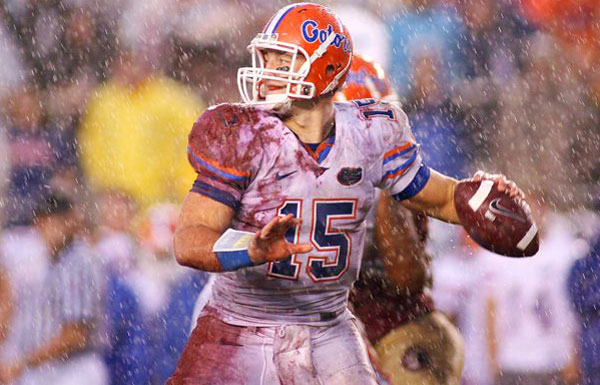
#73. Tim Tebow


Football has long been the great racial equalizer in the United States and perhaps the ultimate tool in bringing about equality in opportunity for Black people.

Pro Football was integrated in 1946 and Americans who had never conversed with Black people were now rooting them on as they scored touchdowns for the home team:
"The integration of major professional sports dealt a blow to segregation across the country, causing other racial barriers to fall," said Voinovich, a former mayor of Cleveland. "The players deserve to be recognized not only for their outstanding contributions on the field but for the vital roles they played in history."
College football integrated later, but used Black players from the former Confederate States as prized recruits. You see, Southern schools were some of the last to integrate (as we have discussed), and the Black players that were denied entry to all-white Southern universities found fertile grounds elsewhere (interestingly, most Black people now would be denied entry to many Southern school's and Northern school's, due to new, semi-rigorous standards, if they didn't excel at football).

As noted in a previous post, were it not for college football, most, if not all, major university's in the United States would have only a handful of Black people in attendance. Thank God for football, for without it, diversity would be non-existent at every college in America, sans Historical Black Colleges and Universities.

Indeed, without sports, it is hard to imagine Black people ever gracing the television screens in American households - remember, Black people are only 13 percent of the population - save for Cops, Tyler Perry shows and documentaries that deal with the unsavory elements of our society (we'll come back to this later).

Football is the end all in America, a religion that surpasses Christianity in devout followers across the land. On fall Saturday's and Sunday's, millions pray to the football Gods above to bestow upon their team a victory, and the demise of their lacking in piety opponent.

And yet, amidst the sacrosanct cathedrals that dot the national landscape and each Saturday and Sunday serve as the American version of the great pilgrimage to the Kaaba, a prodigal son has risen who single-handily has become the dominant force in all of football and threatens to revolutionize the game forever.

We are not talking about Michael Vick, a man who some thought would change the game forever, but instead become fodder for late-night comics.

No, we refer to Heisman Trophy winner Tim Tebow, a 22-year-old white quarterback who has been an integral part of two-national championship teams, a role-model and ambassador for the troubled sport and the epitome of all that a student-athlete can represent, as opposed to just athlete-students:

"Tebow was born on August 14, 1987 in the Philippines to Bob and Pam Tebow, who were serving as Christian missionaries at the time. While pregnant Pam suffered a life-threatening infection with a pathogenic amoeba. Because of the drugs used to rouse her from a coma and to treat her dysentery, the fetus experienced a severe placental abruption. Doctors expected a stillbirth and recommended an abortion to protect her life.

She carried Timothy to term, and both survived. All of the Tebow children were homeschooled by their mother, who worked to instill the family’s Christian beliefs along the way."

Tebow, the son of missionaries, didn't require the generosity of a white family to raise him from poverty - like Michael Oher - but instead had the loving support of his biological parents and the strong bond of Christianity that steered him in a positive direction.

His statistics in college have been incredible, and he is a front-runner for winning his second Heisman Trophy:


Passing
Rushing
Season Team GP Rating Att Comp Pct Yds TD INT Att Yds TD
2006 Florida Gators 14 201.7 33 22 66.7 358 5 1 89 469 8
2007 Florida Gators 13 172.5 350 234 66.9 3286 32 6 210 895 23
2008 Florida Gators 14 172.4 298 192 64.4 2747 30 4 176 673 12

Totals 41 183.2 681 448 65.8 6159 67 11 475 2037 43


However, scouts from the NFL wonder if he can produce the same results at the professional level and question whether he can even play quarterback at all:

"On how Tebow's quarterback skills might not transfer well to the NFL: "With a Tim Tebow, there will be a big adjustment to the NFL. It takes smart accuracy, and accuracy in college isn’t the same thing as in the NFL. He's not a pure pocket passer like a Matt Stafford. Can he make all the throws? Can he make all the reads? Can he learn to release the ball quicker? That remains to be seen."

On Tebow's final projection: "I’d say third or fourth round worst-case scenario, second round as a best case. Probably a third-rounder. That’s assuming his workouts are good."
However, it is not for these reasons that Tim Tebow is included in Stuff Black People Don't Like, but for reasons far more sinister and, odd as it may simple, out of resounding jealousy.

As stated, the national pastime is no longer baseball, but football, the sport most revered by men and the one which finds those whom participate in the game, as the most worshiped and beloved men in all the land.

Black people love football for it is how so many Black males attend college, and yet, as Jeff Benedict points out in his book Pros and Cons: The Criminals who Play in the NFL, few of these Black people learn any civic or ethics lessons there:

"According to the authors' extensive research into more than 500 criminal complaints against the league's recent players, a shocking percentage have been formally charged with committing a serious crime (rape, domestic violence, assault and battery, drug dealing, DUI, etc.). This alarming rate — and the gravity of these crimes — will stun even the most ardent NFL fan. This extraordinary book uncovers the true character behind heroes of the NFL and reveals the stories of the players who have turned America's most popular sport into a national disgrace."
This book, written 13 years ago, omits much that has transpired since then, for as Yogi Berra said, "It is hard to make predictions about the future." Michael Vick, Tank Williams, Pacman Jones and his predilection for "Making it Rain", Plaxico Burress, Donte Stallworth and a litany of other Black players had failed to even suit up for an NFL game when the book was written.

Steve McNair, a famous adulterer, was still in college.

According to Jon Entine, who wrote the book Taboo, Black people are perceived to have a monopoly of the genetic slice of athleticism that the DNA Gods bequeathed upon mankind:

"Asians are 57 percent of the world's population but are virtually invisible on the world stage of running, soccer, and basketball. The smallest of the world's major races, people of sub-Saharan African ancestry, are about 12 percent of the world's 6 billion population, yet their dominance of some sports is staggering. Blacks are 13 percent of the U.S. population but are: 80 percent of professional basketball players, 65 percent of professional football players, one-third of professional baseball players, and 70 percent of women's professional basketball players."
And yet, Tebow has been awarded so many trophies and accolades in his tenure as the Florida Gators quarterback that some wonder if every award shouldn't bear his name from now on.

Remember, it was Michael Vick that was to usher in the era of the new quarterback, prophesied with eerie exactness in the Oliver Stone movie, "Any Given Sunday", a film about a talented Black quarterback who would replace the pocket-passing white quarterback.

Yet, it was Vick who spent two-years in jail for his role in dog fighting, and Tim Tebow who ushered in the era of the "Wildcat" offense, as in 2006 he was a formidable passer and rusher out of the QB position for the Gators during their run to the BCS title.

Interestingly, Tebow has spent a lot of time behind bars and in jail(s) too, but not for reasons that mirror Vick's. No, Tebow spends his time in prison proselytizing hardened criminals and men whose vocation and avocation were murder, about the glory of God and Jesus Christ:

"At a time when Americans are leaving organized religion in large numbers, according to a 2008 Pew Research poll, Tebow is leading his own personal counterinsurgency. "Every Sunday we have a service for our players and their families," says Meyer, who remembers when "three or four kids would show up. Now the room's full." Since Tebow's arrival on campus, and in large part because of him, Florida has launched a series of community-service initiatives. Even as the football program has suffered an embarrassing string of arrests, the number of hours players devote to charitable causes has dramatically increased. "Our community service hours are completely off the charts," says Meyer, who describes his quarterback's influence on the team as "phenomenal."
"You should come with us to death row," he tells a reporter on the drive back to Gainesville. "It's gonna be great!"
On July 21, in fact, Tebow and Williams planned to head to the Florida State Prison in aptly named Starke. There, Tebow hoped to be allowed to speak to the 30 or so prisoners awaiting execution. The more incorrigible the inmate, the more Tebow relishes the chance to save him. "Sometimes it's those guys at rock bottom who are the ones looking for a change," he explains. If Lawtey was an early-season nonconference opponent for Tebow, death row was akin to Death Valley, as LSU's Tiger Stadium is known."
Tim Tebow is a college football mega-star, which means he is worshiped by the masses like few men before him, and even fewer will be after. He has the power to make grown men cry, when one of his perfect passes zips over the head of Black defensive back and ensures the Gators beat that grown man's alma mater.

Remember the Rush Limbaugh- Donovan McNabb crisis of 2003?:
"Let's review: McNabb, he said, is "overrated ... what we have here is a little social concern in the NFL. The media has been very desirous that a black quarterback can do well—black coaches and black quarterbacks doing well."
Of course you, the sports-fan who salivates for every statistic and rumor as a lonely house wive pines over her soap opera does, recall this event with great clarity. But are you prepared to deal rationally with the onslaught that will greet Tebow when he hears his name called in the 2010 Draft?

Tebow is the ultimate athlete and ambassador for the game, in fact the greatest player to ever lace up cleats in college football history. He happens to be white, enjoys spreading the word of Christ to large-congregations of Black people in prisons and yet, he won't be either an athlete who spends all his money nor one whom ends up in a book detailing the large rap sheets of NFL players.

Stuff Black People Don't Like includes Tim Tebow, the individual who has done more to shine a positive light on football then any student-athlete who came before, or will follow. His parents told he should be aborted, which many Black women do without any professional advice, Tebow is a child who never should have been. Steadfastly demolishing myths like "White Men Can't Jump" and striving to bring hope to Black people in prison (many of whom were once cheered by white alumni of college's and university's on the football field), unlike so many other privileged athletes.


Thursday, August 20, 2009

#222. Silenced Whistle Tips


Black people love to make noise. As we have seen with rappers and sports stars, Black people have a constant need of attention that rivals a two-year-old.

Nowhere are Black people more notorious for trying to attract attention then by their vehicles. It is said that a car defines a man, and if this is so, Black people must be defined as perpetually stuck in the infamous The Simpson's episode where Homer meets his brother, a president of a prominent car manufacture (The episode is Oh Brother, Where Art Thou?). Homer designs a vehicle so ridiculous and tricked out that it bankrupts his brothers firm. Dubbed "The Homer," Black people found the car amazing and decided to incorporate into their imaginative designs.

Black people have taken a nod from this episode and attempted to out Homer, Homer Simpson in designing the most unimaginably horrifying vehicles that patrol motorways across the nation.

One of the main accessories Black people enjoy putting on their cars - besides rims - is the whistle tip, an item that:
"Whistle tips, also referred to as whistler tips, or whistlers, are modified vehicle exhaust pipes that generate a deafening whistling sound during the operation of a motor vehicle, and they can often be heard up to even a mile away.

The whistle tip is a small metal plate with a central hole that is welded into the inner tip of the exhaust pipe. As exhaust gasses are forced through the exhaust system under pressure, they pass through the hole, generating a whistling sound. This fad began within the Oakland Afro-American community..."
Black people, as we know, love attention. Nothing says attention like a whistle tip creating a deafening noise that would give the alien ships from War of the Worlds a run for the their money.

The noise so infuriated people that the decision was made to silence Black people's imaginative invention once and for all:

"As their sole purpose is to create very loud noises that often disturb the peace, whistle tips have received negative publicity, especially among the residents of certain locations where they are prevalent. In 2002, San Leandro, California redrafted its noise ordinance to ban the devices and the Oakland Police Department began cracking down on them by interpreting state laws as including tinkering with mufflers.

"The Berkeley City Council supported a measure by Assemblywoman Wilma Chan (D-Alameda) introduced a bill into the California State Assembly in 2003 which would effectively ban whistle tips in California. The bill was passed 22-15 by the state senate and then signed into law by Governor Gray Davis, going into effect on January 1, 2004. While violators will be subject to fines of $250 and businesses that install them can be fined up to $1,000, surcharges and enforcement fees will bring it up to $850 and $3,400."
Stuff Black People Don't Like includes silenced whistle tips, one of the most powerful inventions in Black people's canon of inventions, that has now been silenced by the envious white power structure.

Thankfully, Black people still have out-Homered Homer Simpson in hideous cars, but they have lost whistle tips and will be forced to invent another noise maker to make up for this inexcusable loss.

Show all

Friday, July 24, 2009

#113. Waiting Until Graduation to Start Stripping


High school in the United States is an exciting time for members of every race. Football games, the first parties with alcohol and prom season all leave lasting memories and impressions that will last a lifetime.

John Hughes, the incredible director of 1980s movies, chronicled life for white people in high school in many of his films, from The Breakfast Club to Sixteen Candles. However, his talents and artistic mind would be incapable of creating the video and story you are about learn about, once again coming to you live from Clayton County, Georgia.

The county that is quickly becoming the blueprint for all other majority Black, government controlled by Black people for the benefit of only Black people, Post-Obama America, is also the home to yet another inclusion in Stuff Black People Don't Like: waiting until graduation to start stripping.

Jonesboro High School, that crown jewel of Georgia educational system - and one of the schools of the only county in the last 40 years to lose its accreditation - is roughly 65 percent Black and 42 percent of its students are eligible for free lunches. It boasts a graduation of 64 percent.

In 2008, the Jonesboro High School dance team made national news when a video of their halftime performance made it on Youtube and reminded some that the Gold Club might have shut down in Atlanta, but it had found permanent residence in the Jonesboro High Basketball Arena:

"A provocative dance performed at a basketball game has forced Jonesboro High School to shut down the dance team for the rest of the season...From the beginning, some parents say they noticed the uniform -- the short shorts, the tight shirts, the thigh-high socks -- and then, the moves.

The girls pulled six boys from the bleachers -- who sat back and watch from orange chairs, while the dancers bounced, shook and squatted around them.Trailed by parent complaints, the eight-member dance team was suspended -- banned from practicing and performing for the rest of the season.

Their dance advisor was removed from the team."I told my husband they look like the future hookers of America," said one parent, Joanne Holt. "It's terrible! And it's the teachers that's teaching 'em!"
Black people gyrating to music and dancing provocatively is nothing new, as any rap video will display misogynistic behavior toward females. High school students doing this, though, is a step in a direction that will provide a new generation of voracious advocates of the practice of "Making it Rain".

Stuff Black People Don't Like will include waiting until graduation to start stripping, for rap videos glorify the debasement of women and thus, the trickle-down theory of the pervision of morality has affected even the fine citizens of Clayton County, the county that epitomizes the coming Black rule in America.


Thursday, July 23, 2009

#602. The Morning After 'Making It Rain'


All people throughout history have secretly desired the ability to control the weather. Farmers who saw their crop ruined due to droughts; high school football players who dreaded the 100 degree weather during two-a-days in the summer; and George W. Bush, just days before Katrina hit New Orleans, all wished the ability to manipulate the weather.

However, only Black people have mastered the idea of controlling precipitation and this amazing skill is known as "Making it Rain":
"When you're in da club with a stack (of money), and you throw the money up in the air at the strippers. The effect is that it seems to be raining money."
Black people, particularly Black athletes, are highly adroit at channeling the weather Gods and creating a monetary monsoon at their command when visiting strip clubs.

Adam "Pacman" Jones, a prime example of the modern Black athlete, was involved in one particular magical evening, when he was able to conjure up a financial flood that reminded some people at the strip club of the old saying, "Apres-je, le deluge":
"...what happened inside a Las Vegas strip club on Feb. 19, 2007, when Adam "Pacman" Jones showered scantily clad dancers with money. Just minutes after "making it rain," Jones was involved in a fight inside the club. A short time later, three people were shot outside the club.

Shortly after 2 a.m. on Feb. 19, Jones and an entourage of about seven people -- a group that included his stylist; his business manager, Chris Horvath; and Robert Reid, Jones' massive bodyguard for the evening -- arrived at the Minxx Gentlemen's Club & Lounge...

Jones told police he arrived at the club with "close to $100,000." He took $40,000 out of his Louis Vuitton bag and exchanged it for several stacks of $1 bills, which he put in a black trash bag, according to his statement. So much money was thrown onto the main stage that dancers, after their sets, started filling buckets with the loose bills covering the stage."
Adam "Pacman" Jones uncanny ability to "make it rain" was upstaged by the exploits of fellow NFL player Vince Young, who also has the God-like ability to perform feats of down-pour of dollars at a moments whim:
"The last time a member of the Tennessee Titans decided to "make it rain" while hanging out at an event with Nelly -- people got shot and lives were ruined. But Vince Young isn't one to learn from other people's mistakes...While onstage with the rapper during a performance in Houston last week, Vince rolled out a wad of cash and started showering the crowd with dollar bills. But unlike the incident with his former teammate Pacman Jones, everyone emerged unharmed this time."
"Making It Rain" is a popular rap song, that contains these wonderful lyrics that allow the world to see how Black people can conjure up the ability to perform daring feats of weather manipulation:
"Oww Scottie lets make it rain on these niggas...

I'm in this bitch with the terror got a handful of stacks Better grab an umbrella

I make it rain, (I make it rain)

I make it rain on them hoes make it rain,(I make It rain)

I make it rain on them hoes I make it rain,(I make it rain)

I make it rain on them hoes I make it rain(I make it rain)

I make it rain on them hoes"
Black people - particulary Black athletes and rappers - can "make it rain" with an authority unlike any Indian chieftan performing the most elaborate rain dance. However, the idea of "making it rain" does have horrible ramifications, as the celebratory evening can leave devastating memories in the morning after, not to mention the financial lunacy of unloading massive amounts of cash with a low return on investment proposition.

The morning after "Making it Rain" can be a traumatic experience for Black people, as Pacman Jones found out:
"Police seized $81,020 in cash belonging to Tennessee Titans cornerback Adam "Pacman" Jones, money they said sparked a melee and a triple shooting at a strip club over the weekend, court documents show

Jones was showering more than 40 strippers onstage at Minxx Gentlemen's Club & Lounge early Monday with the cash "intended as a visual effect," according to a search warrant. But a scuffle broke out when the Houston promoter who hired the strippers told them to pick the money up."
Jones was suspended from the NFL for one year after this incident, and Vince Young has never recovered from his bout with "Making it Rain", nearly committing suicide and losing his starting job to a white quarterback.

Stuff Black People Don't Like includes the morning after "Making it Rain" for the ability to create spontaneous weather patterns yielding wads of cash for strippers, strips away the judgement skills of the person performing the feat. Yet, this is one of the few instances when Black people do leave a solid tip, however the ramifications the morning after are to great to warrant "Making it Rain".

FYI - ESPN has removed the clip below that exposes the story of Pacman Jones: CLICK HERE TO VIEW IT.